Jesus said, "And what I say to you, I say to all, Watch!” - Mark 13:37
FULFILLED PROPHECIES
fulfilled prophecy
What Does the Bible Say About Bible Prophecy?
Watching and studying Bible prophecy strengthens the believer by building up faith, encouraging spiritual readiness, and providing comfort in uncertain times. As taught in 1 Corinthians 14:3–4, prophecy is meant for edification, exhortation, and comfort, helping Christians understand God’s plan, remain watchful, and persevere through trials. By paying attention to prophetic Scripture, the church is collectively strengthened—gaining clarity about future hope, motivation to live faithfully, and reassurance that world events unfold under God’s sovereign purpose.
POPE FRANCIS RESURRECTION & The Prophetic Timeline To The 3rd Temple
YouTube
May 12, 2026
What if the timeline to the 3rd Temple has already been revealed in Scripture? In this video, we break down a prophetic timeline.
Don't Forget to order my book
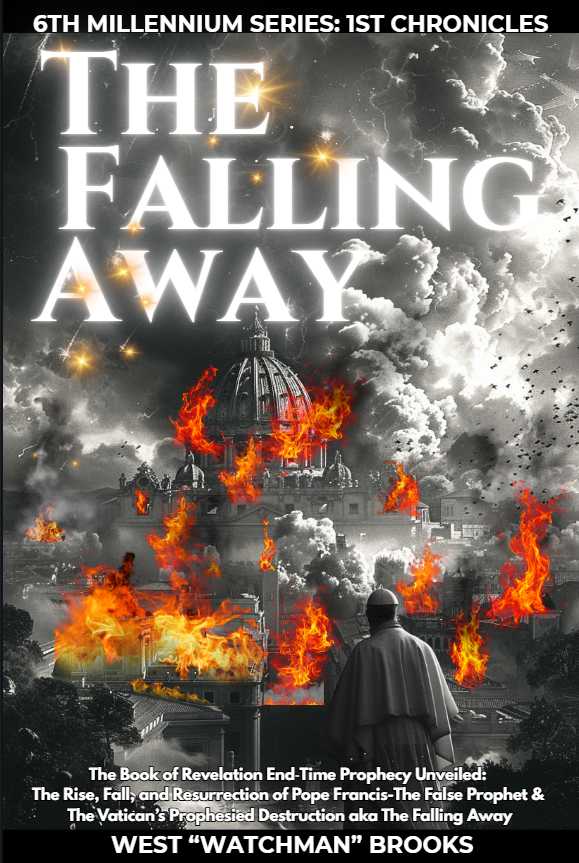
6TH Millennium Series - 1st Chronicles
The Falling Away
A Book Authored By West "Watchman" Brooks

Here's what you get:
Deep Biblical Analysis
Clear explanations of Revelation that connect scripture with real world events.Historical Evidence & Timelines
Discover key events involving the Vatican, world leaders, and prophecy that most churches never discuss.Prophecy Charts & Visual Guides
Easy-to-understand diagrams showing how Revelation 17 may already be unfolding.A New Perspective on “The Falling Away”
Learn why the biblical “falling away” may refer to a prophetic event involving the Vatican.
Reviews
"Wow! This book is beyond informative, with proof in history events backed up with scripture. The way the author wrote this book is an easy read for any Bible prophesy beginner like me. It give the reader the opportunity to to do their own research without being misled. I truly enjoyed this book and I honestly I can't wait for the next book where he will explain who the Anti-Christ can be. It's a must read, study research and preach subject which most churches lack to address. I learn abundance with lots of note taking. I recommend this book 100x over n overall great book to add to your collection!"
"This book is the best book I’ve ever read that explains the book of revelation and connects the Bible to our current times. This book is set out in a logical sequence. The author should be highly praised for his outstanding and exceptional work. It shows his superb knowledge and wisdom in respect to this matter. I can’t wait for his next book to come out. It is definitely a must read."
"I've been studying eschatology and the various interpretations on the book of Revelation for years.
The interpretation of prophecy found in this book, is UNIQUE & extremely interesting. It's also very straightforward and simple to understand. One of the best interpretations I've come across in my studies. I recommend this book to all those who remain unconvinced with the mainstream interpretations. I give it 5 Stars."
Prophetic Events From Recent To Oldest
Feb. 2026
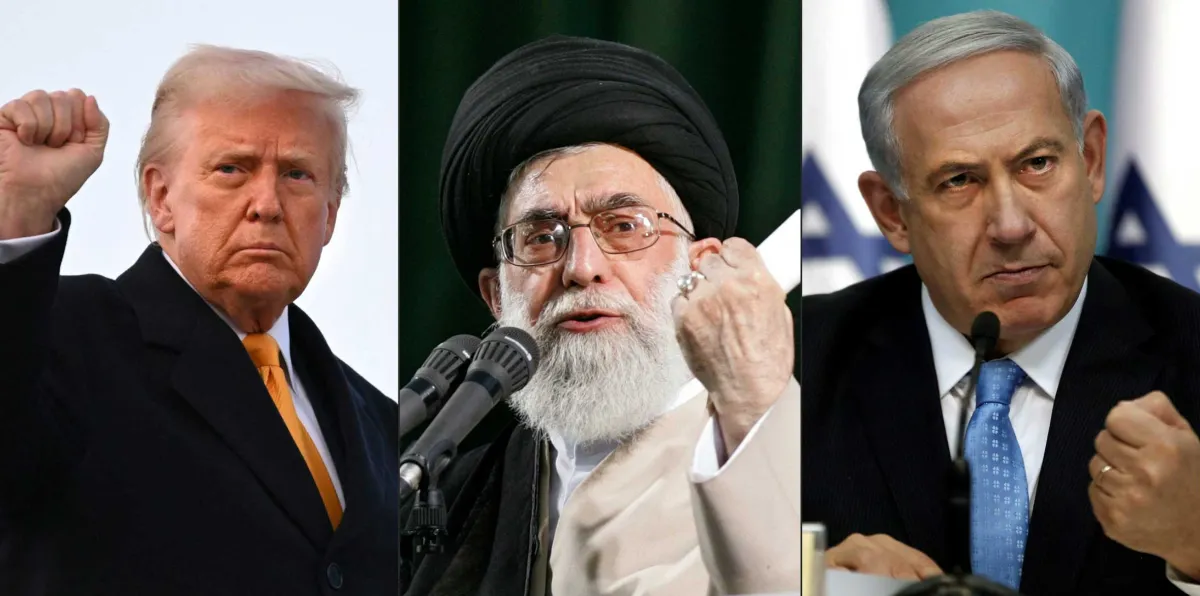
The US & Israel Goes To War With Iran
Beginning February 28, 2026, the United States and Israel launched coordinated, large-scale military operations (Operation Epic Fury) against Iran, targeting nuclear, military, and leadership sites. The strikes killed Supreme Leader Ali Khamenei, aiming to dismantle Iran's missile capabilities and trigger regime change. Iran retaliated with widespread drone and missile strikes
April 2025
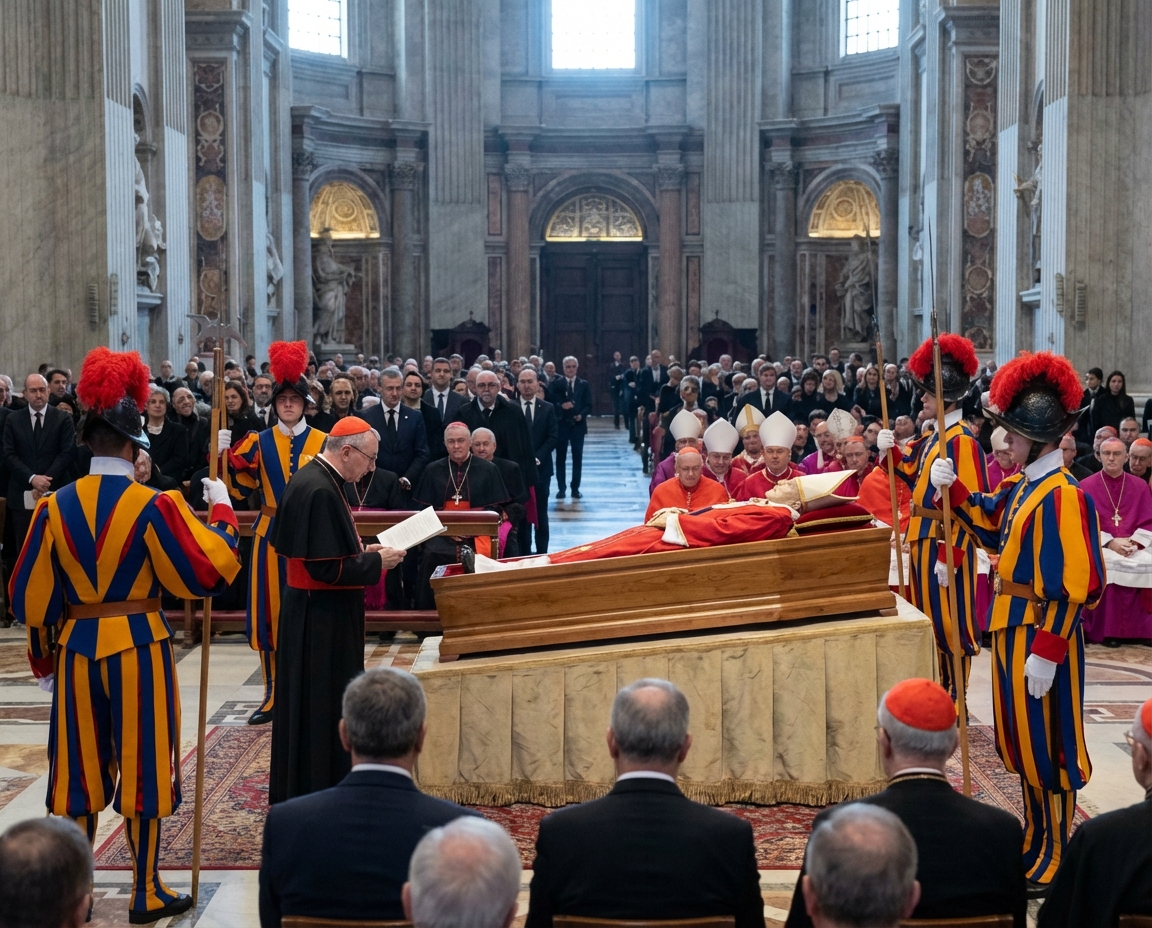
The Death of Pope Francis & Awaiting His Resurrection
In April 2025, Pope Francis died following ongoing health complications during the season when Christians commemorate the resurrection of Jesus Christ. Some students of prophecy view the timing as symbolically meaningful, drawing connections to passages such as Revelation 17:8 and 17:11 that reference a figure who “was, and is not, and yet will be.” Interpretations linking contemporary events to these prophetic texts vary among believers, with many emphasizing the importance of discernment and careful study of Scripture.
March 2025
UN expert accuses Israel of ‘genocide’ in Gaza
Accusations of genocide against Israel, particularly regarding the war in Gaza, often point to actions beginning on October 7, 2023. A formal case filed by South Africa at the International Court of Justice (ICJ) in December 2023 alleges that Israel's military actions in Gaza, following the 7 October attack, constitute genocide.

January 2024
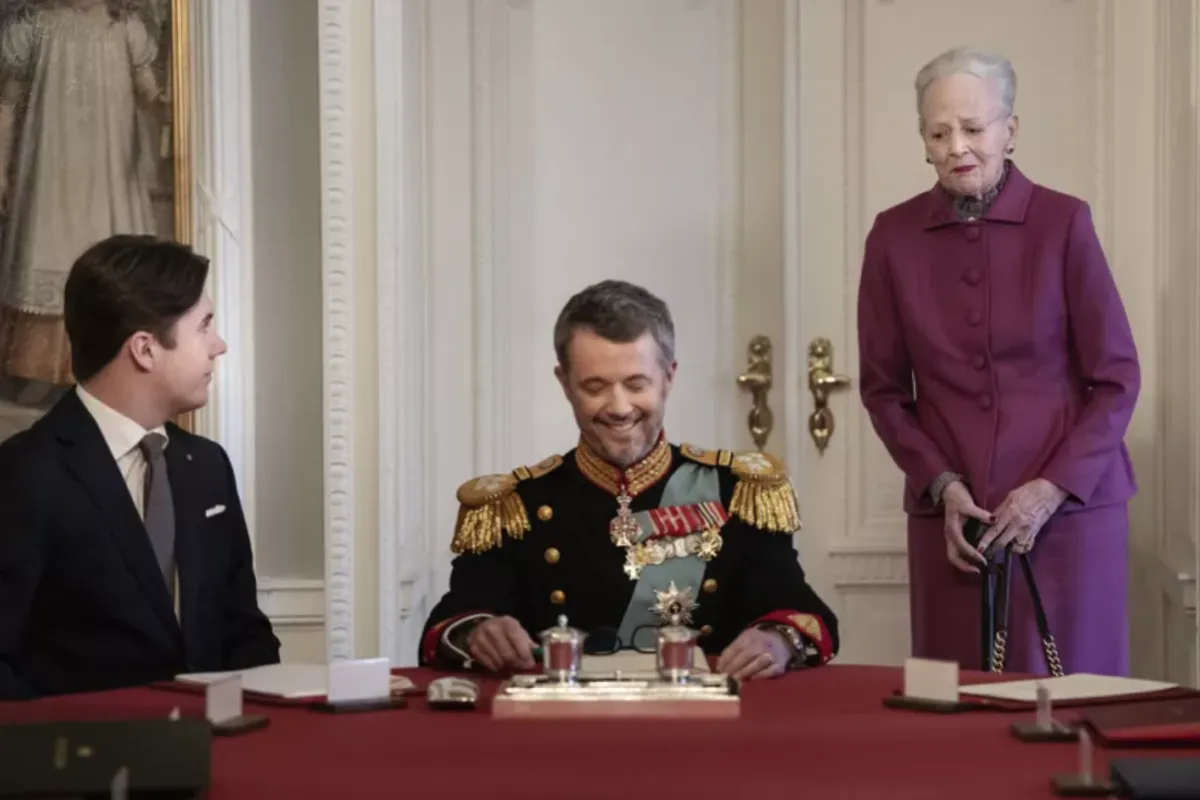
Queen Margrethe II’s Abdication and the Rise of King Frederik X-The 10th King
In 2024, Queen Margrethe II of Denmark abdicated the throne, passing the crown to her son, who became King Frederik X. This transition marked a historic moment for Denmark’s monarchy, and some students of prophecy view such leadership changes among global rulers as symbolically noteworthy, though interpretations connecting them to prophetic themes—such as the “ten kings” imagery—vary among believers.
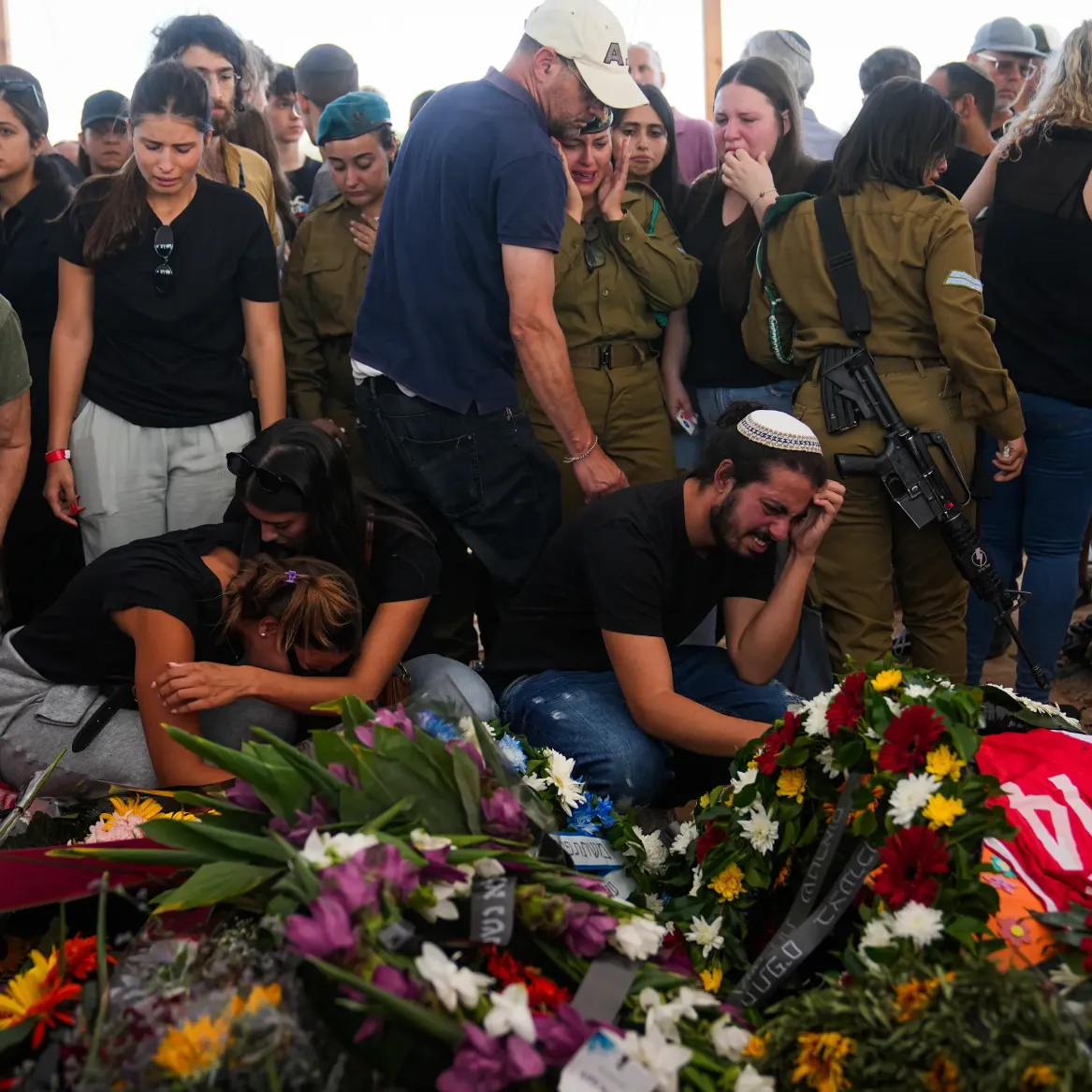
Oct. 7, 2023
Hamas Attacks Israel
October 7 refers to the date in 2023 when Hamas-led militants launched a major surprise attack from the Gaza Strip into southern Israel, resulting in the deaths of over 1,200 people, mostly civilians, and the taking of 254 hostages. It is considered the deadliest attack in Israel's history.
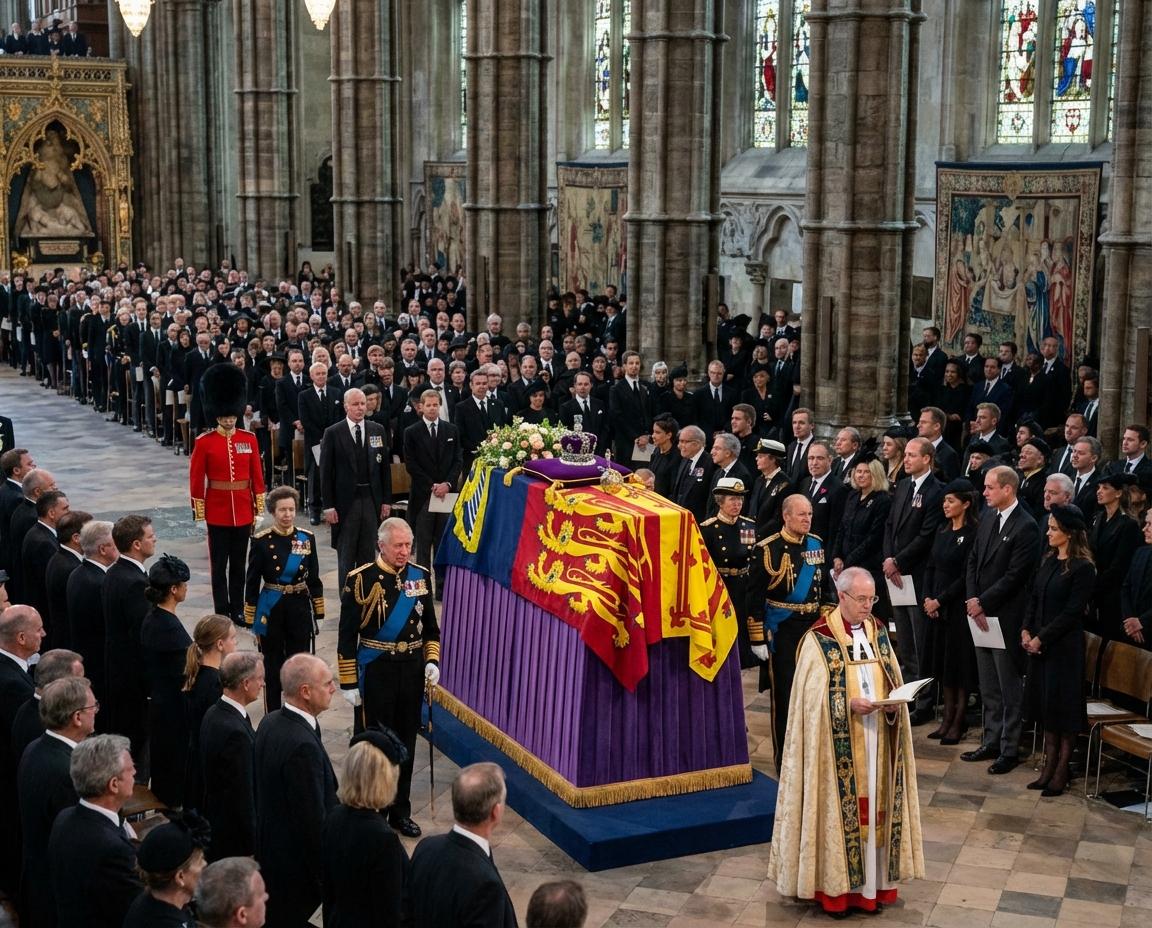
September 2022
The Passing of Queen Elizabeth II and the Accession of King Charles III-The 9th King
In 2023, Queen Elizabeth II died after more than 70 years on the throne, marking the end of a historic reign. Her passing led to the immediate accession of her son, who became King Charles III, ushering in a new era for the United Kingdom and the Commonwealth.
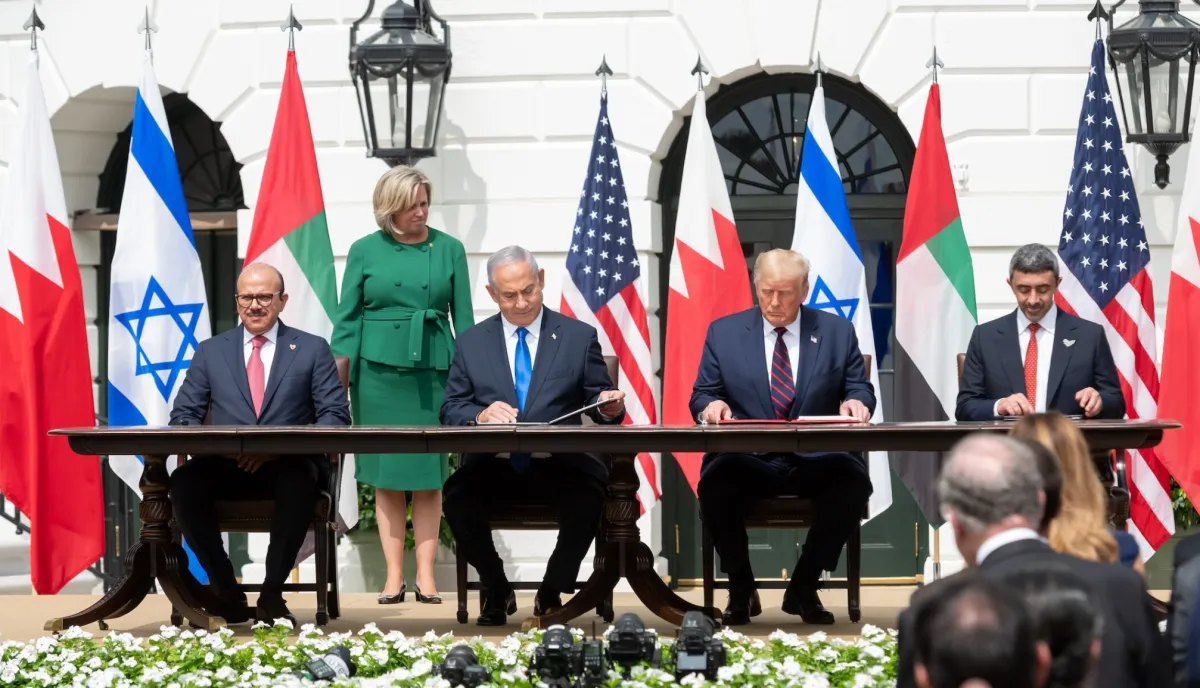
September 2020
The Abraham Accords and "The Kings From The East" From Revelation 16:12
In 2020, President Donald Trump helped broker the Abraham Accords, a series of agreements that normalized relations between Israel and several Arab nations: Bahrain, Sudan, Morocco. Many students of prophecy view these growing alliances as geopolitically significant, sometimes connecting them to interpretations of Revelation that speak of emerging regional powers and future alignments, though perspectives on their prophetic meaning differ.
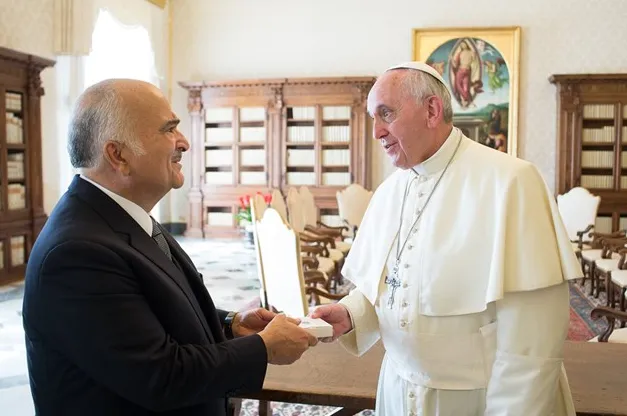
September 2014
Pope Francis and Prince Hassan: A Meeting for Interfaith Dialogue-The Rise Of The False Prophet & Antichrist
In September 2014, Pope Francis and Prince Hassan of Jordan met to discuss peacebuilding and interfaith cooperation between Christians and Muslims. Their conversation highlighted shared commitments to dialogue, mutual understanding, and efforts to promote stability and respect among religious communities in the region.
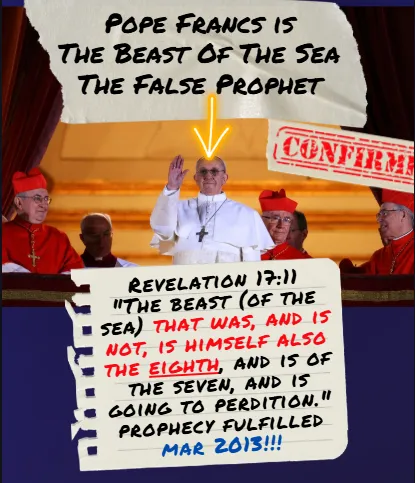
March 2013
Revelation 17:11 "the 8th Is The Beast"
Pope Francis and a New Global Era
In March 2013, Pope Francis became the new leader of the Roman Catholic Church, notable as the first pope from the Western Hemisphere. His election marked a historic shift in the Church’s global representation and signaled a renewed emphasis on outreach, humility, and engagement with contemporary social issues.
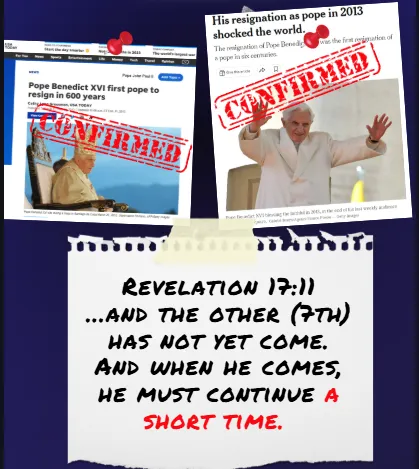
Feb 2013
Revelation 17:10 "the 7th will be there a short time." Pope Benedict XVI’s Historic Resignation
In February 2013, Pope Benedict XVI made the rare decision to resign from the papacy, breaking a centuries-long tradition in which popes typically served until death. Many students of prophecy view this unprecedented transition as symbolically significant, sometimes connecting it to passages such as Revelation 17:10 that speak of rulers serving for a short time, while interpretations of its prophetic meaning vary among believers.
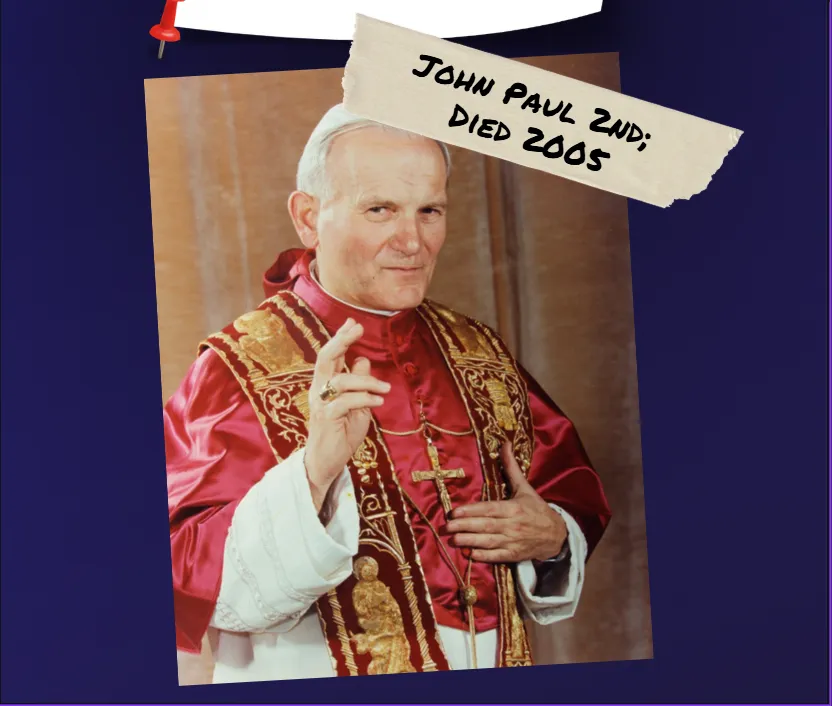
2005
Revelation 17:10 - "One Is" (The 6th)
Pope John Paul II
1922-1978
Revelation 17:10 - "Five Kings Have Fallen"
Since Vatican is a monarchy, Popes are actually kings. Therefore 5 kings means the last five Popes
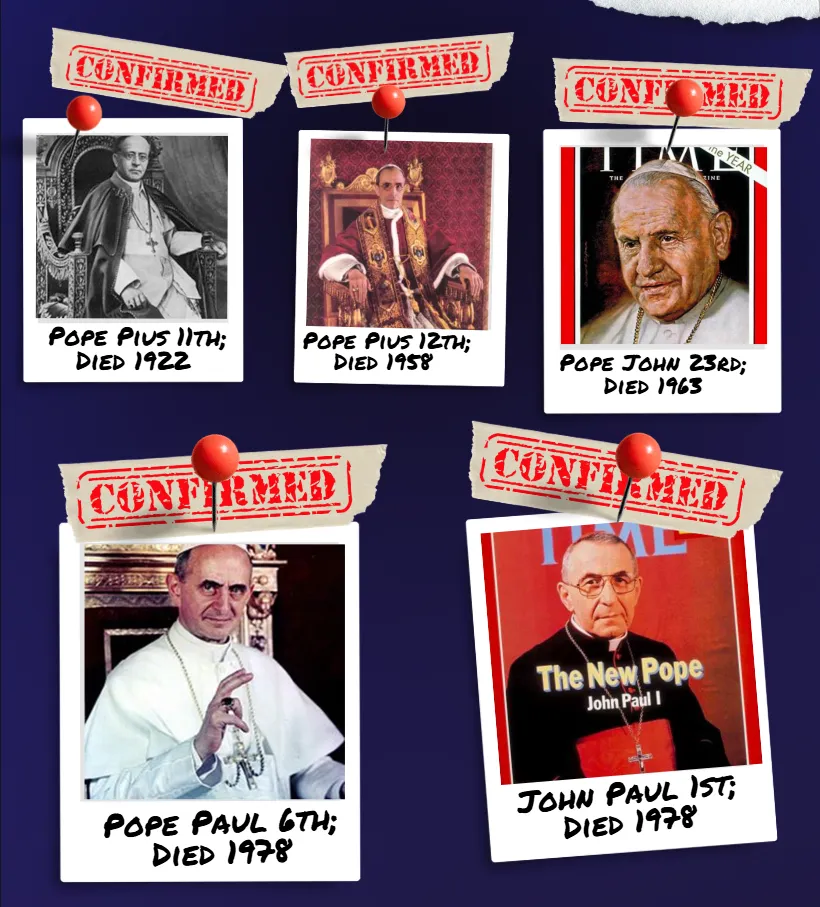
The 7 Hills Are 7 Mountains Of Rome
The angel gives the interpretation to John, indicating the 7 heads are 7 mountains (not kingdoms). It's unwise to reinterpret what the angel already interpreted. “Here is the mind which has wisdom: The seven heads are seven mountains on which the woman sits. 1
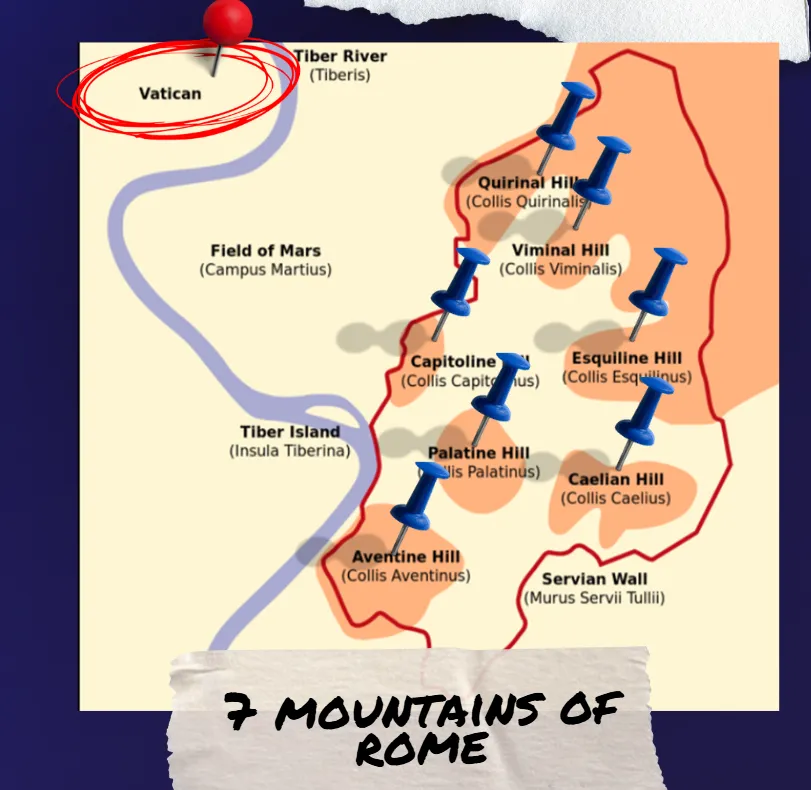
The Harlot Has A Gold Cup
Just as the Harlot has a golden cup, likewise we can see the Roman Catholic Church also has a golden cup in their Eucharist ceremony. Revelatinn 17:4, having in her hand a golden cup full of abominations and the filthiness of her fornication.
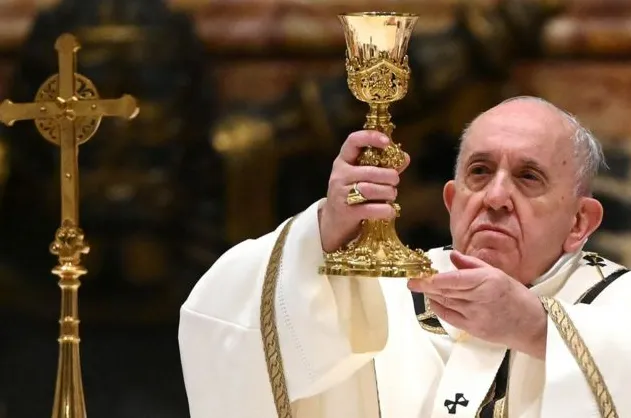
The Harlot Is Adorned
Revelation 17:4 indicates the Harlot is "adorned with gold and precious stones and pearls...". Likewise we see with the Papacy, Popes are adorned with gold, precious, stones, and pearls with the Papal Tiaras.
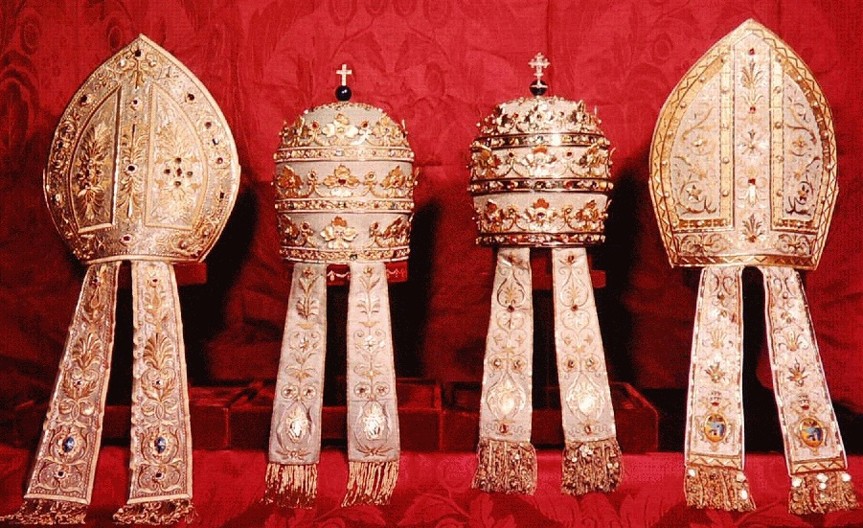
The Harlot Wears Red & Purple
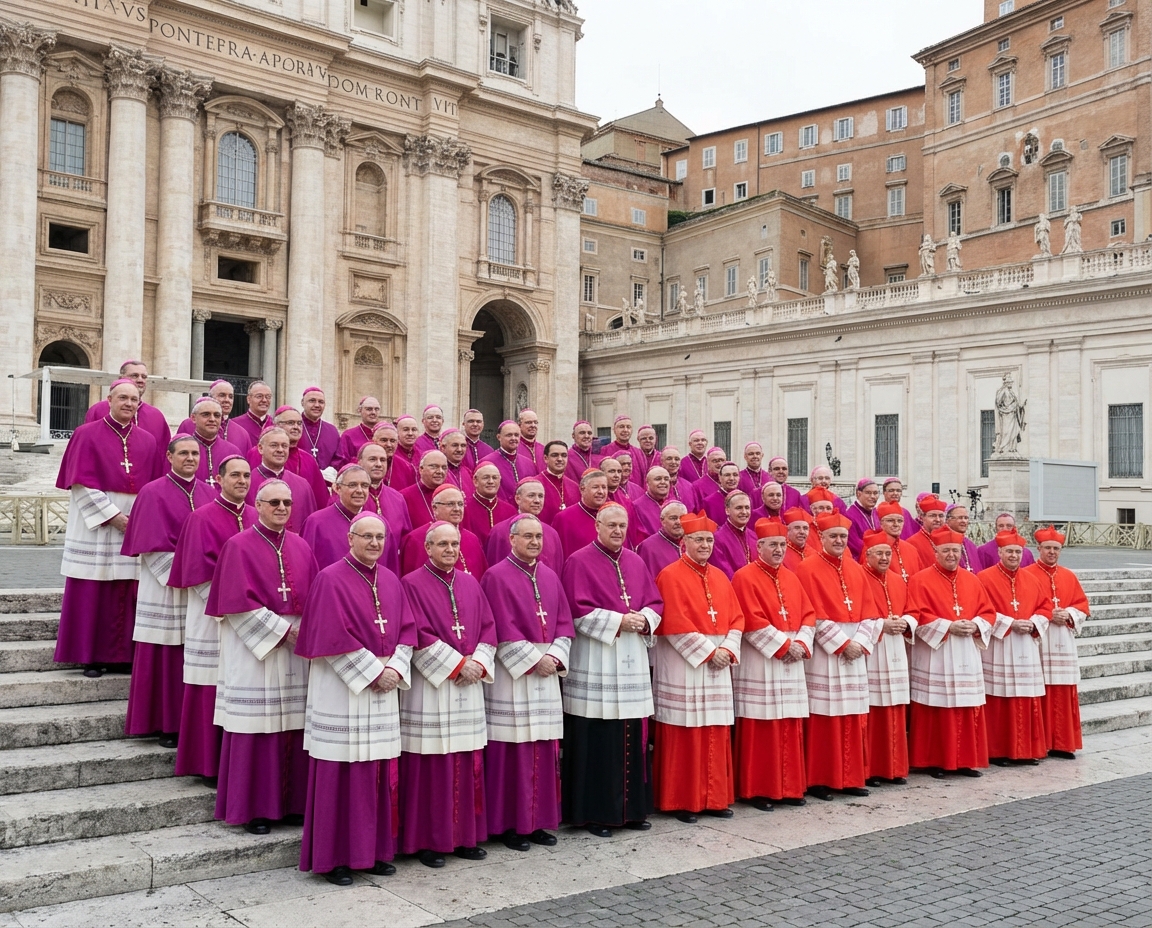
Revelation 17:4 "the woman was arrayed in purple and scarlet," Likewise we see present day, Catholic Bishops and Cardinals are identified with wearing purple and red as seen with the Harlot of the end times.
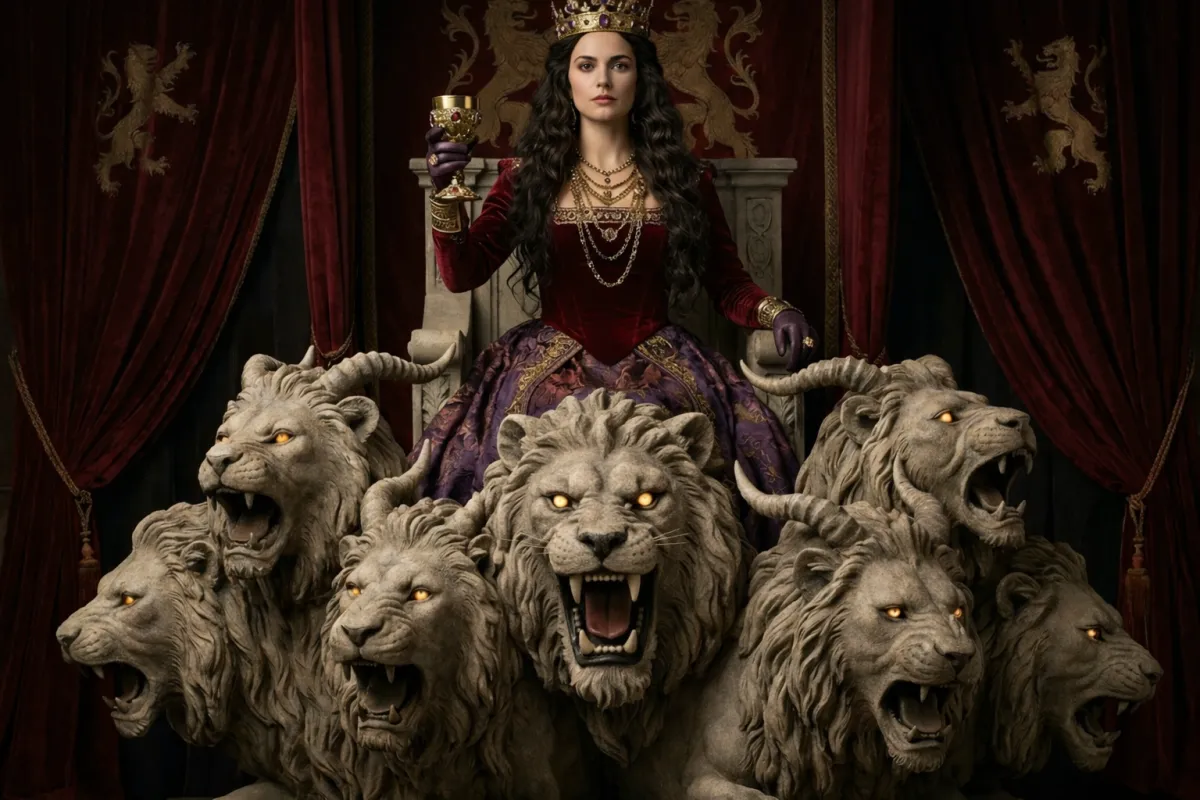
The Revelation 17 Harlot
Revelation 17:1-2, "Then one of the seven angels who had the seven bowls came and talked with me, saying to me, “Come, I will show you the judgment of the great harlot who sits on many waters, 2 with whom the kings of the earth committed fornication, and the inhabitants of the earth were made drunk with the wine of her fornication.”3 So he carried me away in the Spirit into the wilderness. And I saw a woman sitting on a scarlet beast which was full of names of blasphemy, having seven heads and ten horns."
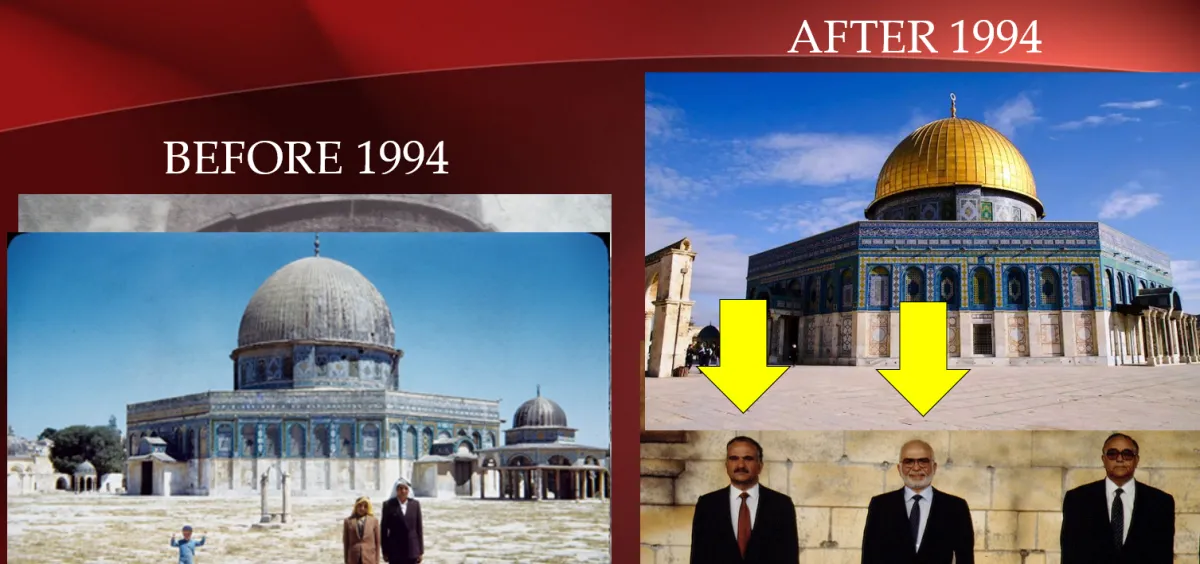
The Temple Mount Before & After 1994
After the Israel-Jordan peace treaty, the Hashemite Kingdom of Jordan becomes the custodians of the Jerusalem holy site. King Hussein restores the Dome of the Rock applying gold on the Mosque.
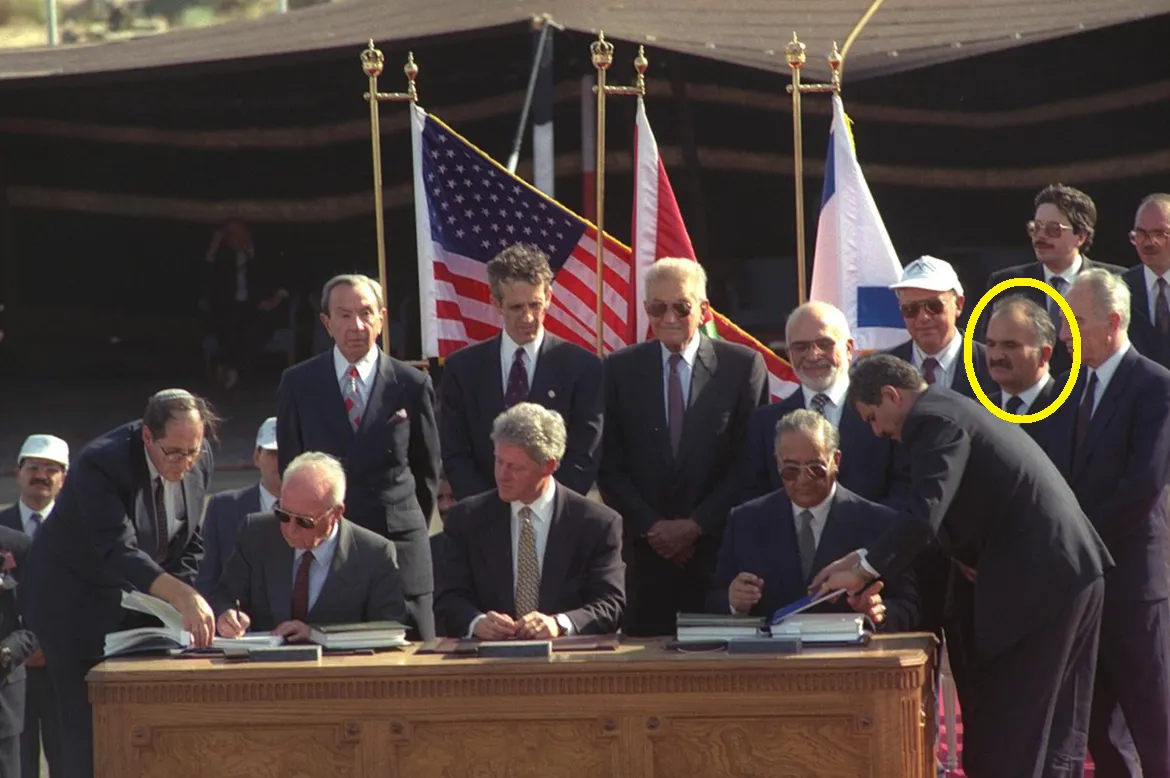
1994 The Jordan–Israel Peace Treaty
In 1994, Jordan and Israel signed a peace treaty that formally normalized relations between the two nations. As part of the agreement, Jordan’s Hashemite leadership was recognized for its special custodial role over Islamic holy sites in Jerusalem, reinforcing the kingdom’s longstanding religious and historical connection to the city.
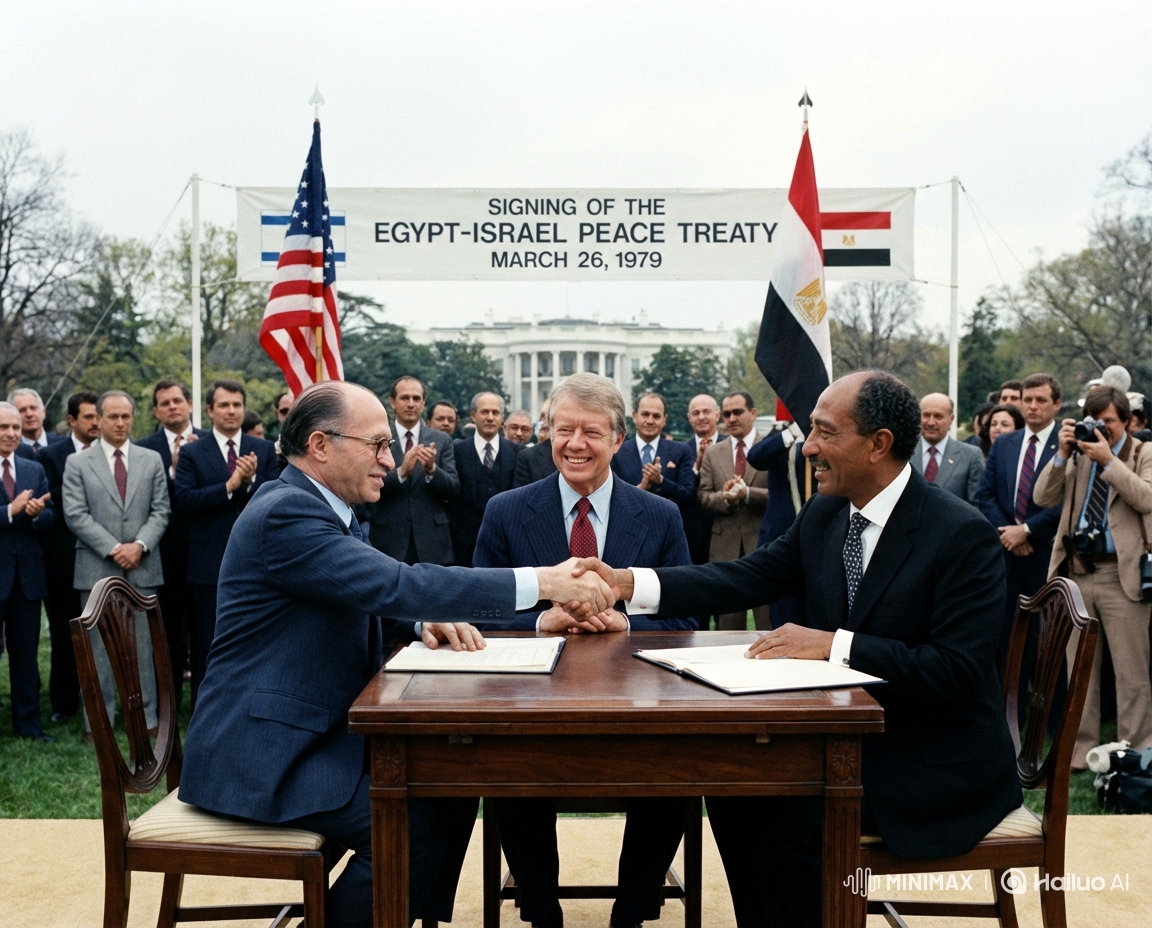
1979 The Egypt–Israel Peace Treaty
In 1979, Israel and Egypt signed a historic peace treaty, marking the first formal agreement between Israel and an Arab nation. Many students of prophecy view this cooperation as significant, seeing it as a possible foundation for future regional alignments that some interpret as connected to end-times scenarios involving nations responding to conflict surrounding Israel.
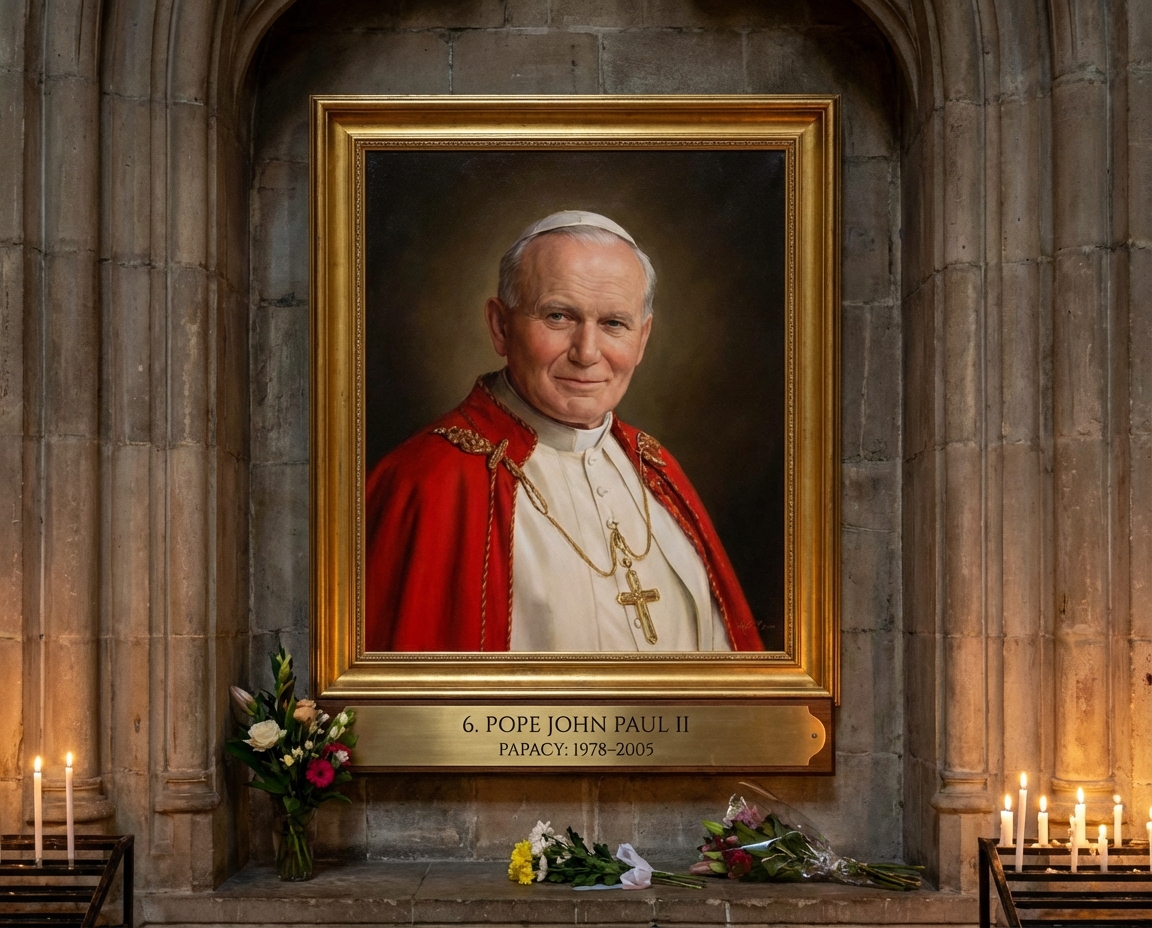
1978-2005 Pope John Paul II Begins His Papacy
In 1978, Pope John Paul II became the new leader of the Roman Catholic Church. His long and influential papacy would span more than two decades, shaping the Church’s global presence, engaging world leaders, and playing a notable role in major political and cultural shifts of the late 20th century.
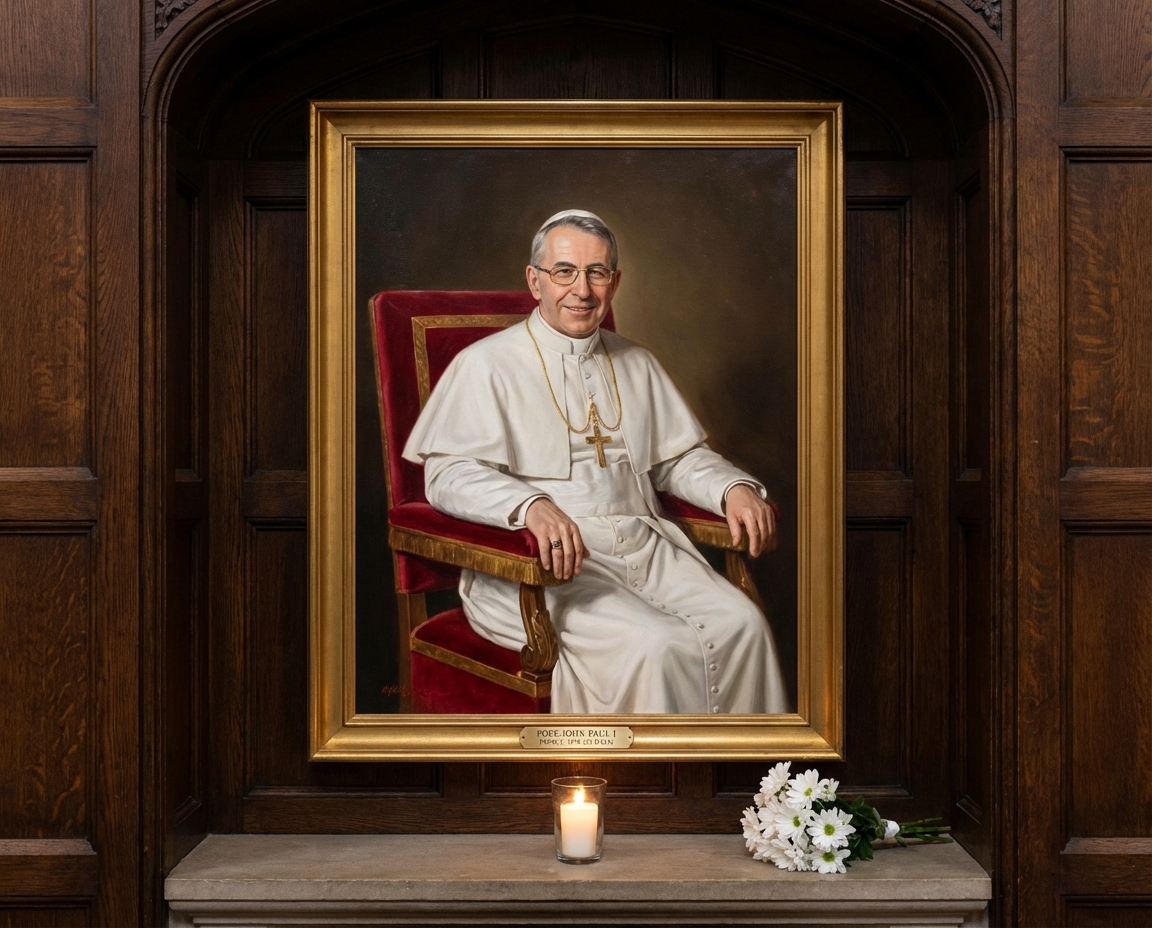
1978-1978 Pope John Paul I’s Brief Papacy
In 1978, Pope John Paul I became the new pope and leader of the Roman Catholic Church. His papacy was notably brief, lasting only 33 days before his sudden death, which brought an unexpected end to his time as head of the Church.
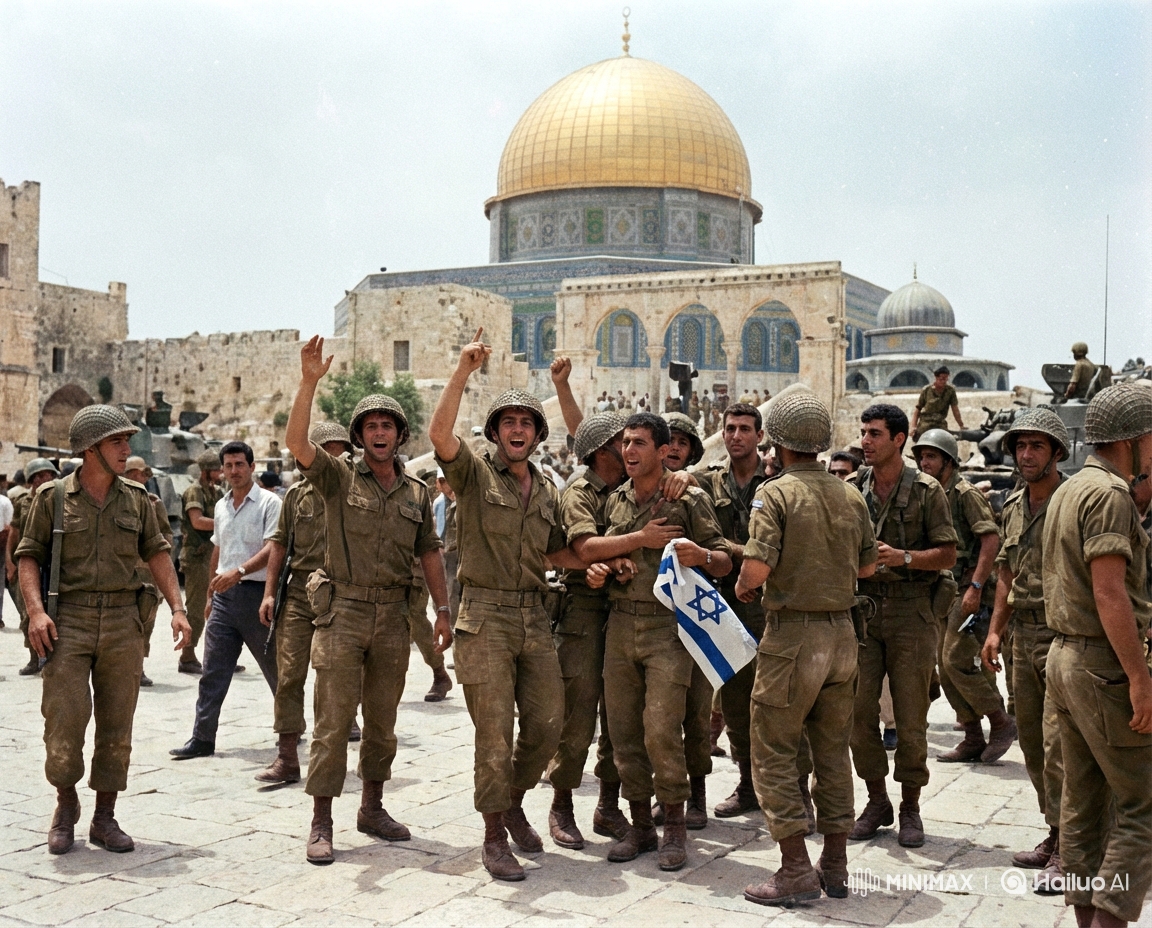
1967 The Six-Day War and the Status of Jerusalem
In 1967, Israel fought the Six-Day War against neighboring Arab nations and gained control of East Jerusalem, including the Old City. Many Christians view this moment as prophetically significant, connecting it to passages such as Zechariah 8:8, which speaks of God bringing His people back to dwell in Jerusalem and restoring their covenant relationship in truth and righteousness.
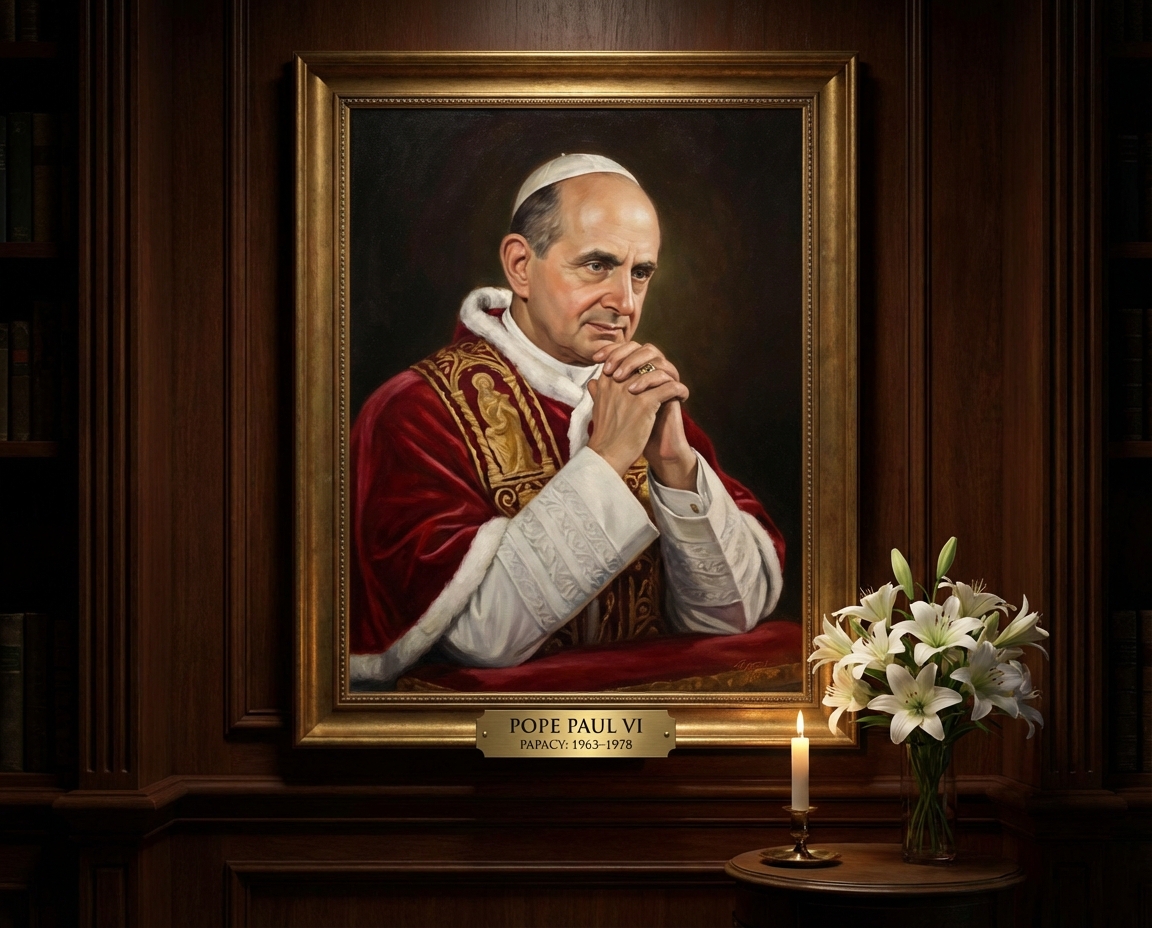
1963-1978 Pope Paul VI and the Continuing Reforms
In 1963, Pope Paul VI became the new leader of the Roman Catholic Church and the Vatican following the death of Pope John XXIII. His papacy continued the work of the Second Vatican Council, guiding the Church through significant theological, cultural, and global developments.
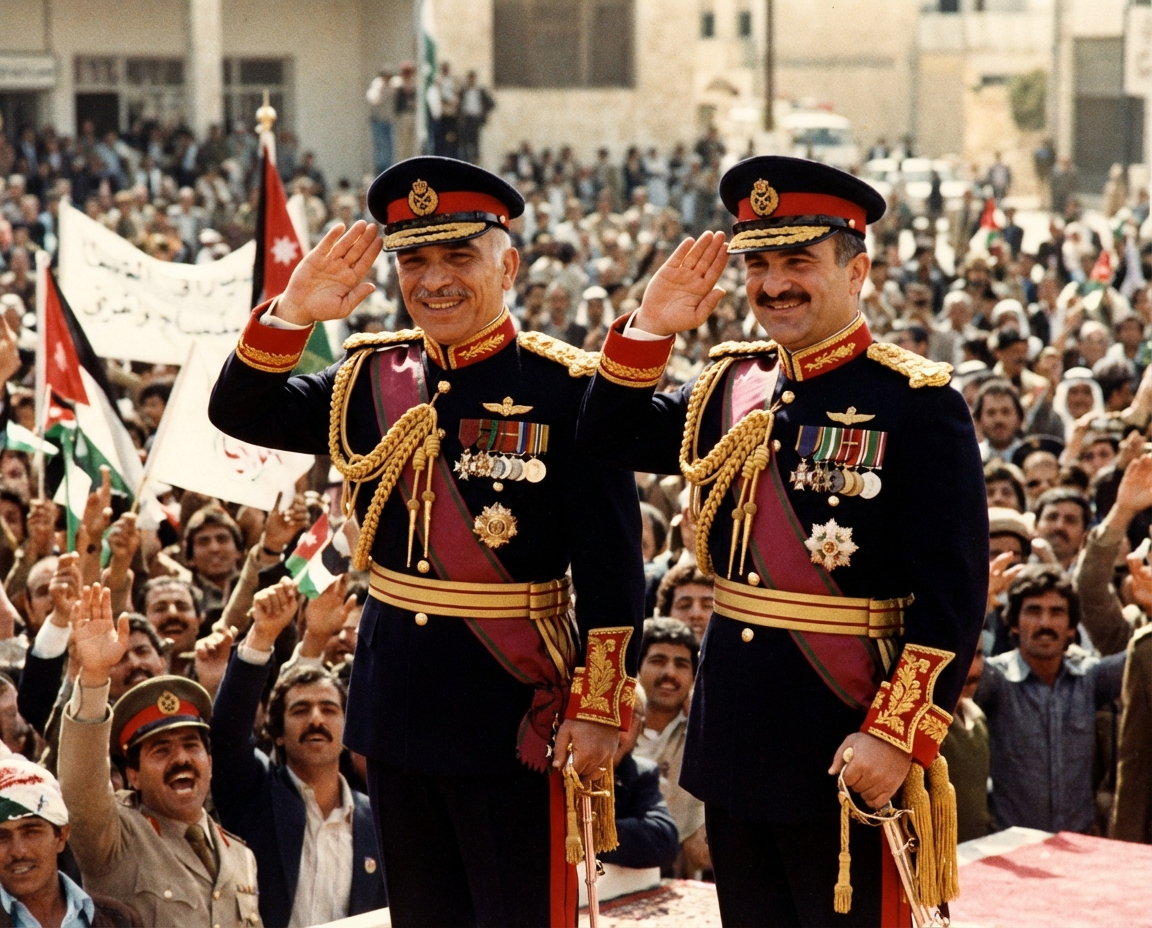
The Appointment of the Crown Prince Hassan Bin Talal of Jordan
During King Hussein’s reign, his brother, Prince Hassan, was appointed Crown Prince, positioning him as the heir to the Jordanian throne. This decision was intended to ensure continuity in Hashemite leadership and stability within the kingdom’s line of succession.
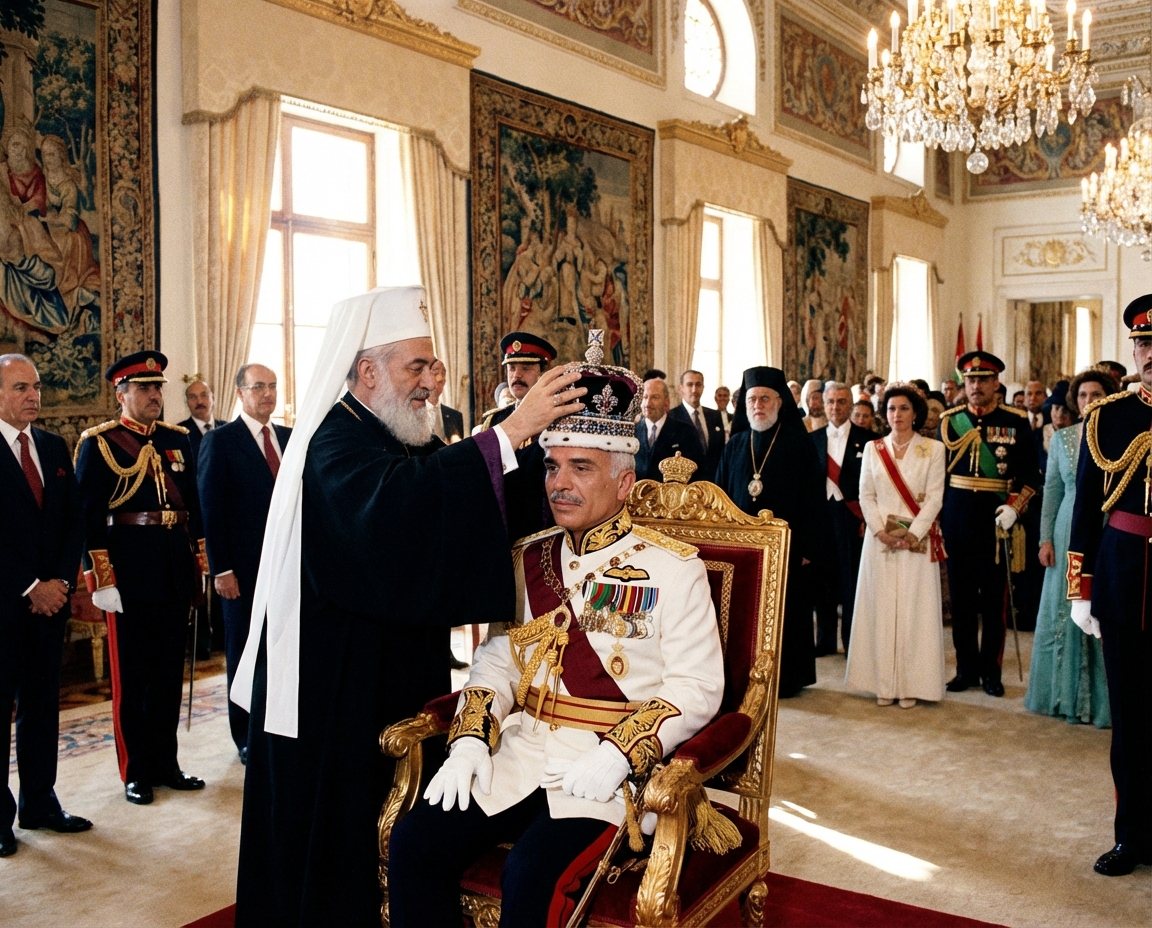
1952 King Hussein Becomes King of Jordan
In 1952, King Hussein II became the new king of Jordan after the abdication of his father, King Talal. His long reign would shape Jordan’s modern identity, guiding the nation through regional conflicts, diplomatic efforts, and significant political change.
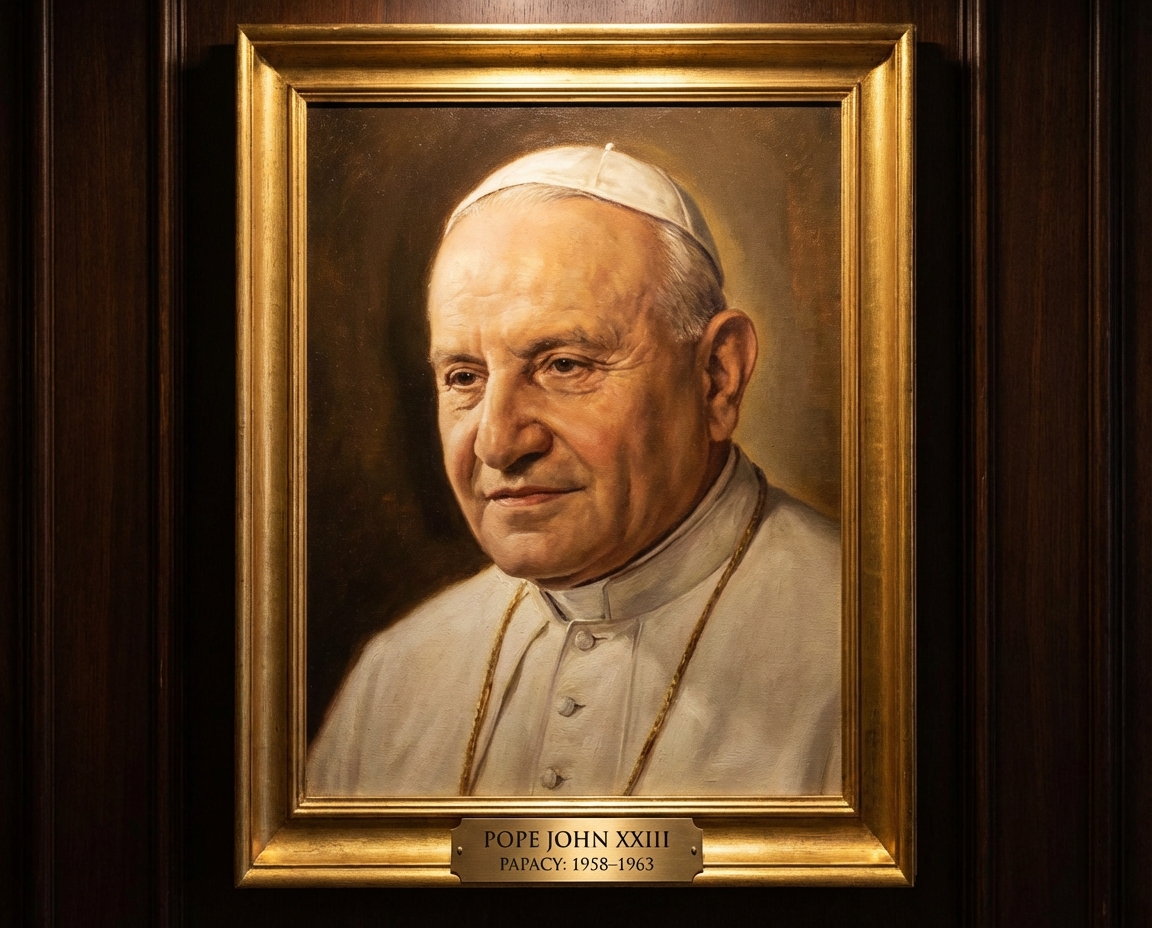
1958-1963 Pope John XXIII and a New Direction for the Church
In 1958, Pope John XXIII became the new leader of the Roman Catholic Church. His papacy is remembered for initiating significant renewal within the Church, most notably convening the Second Vatican Council, which sought to engage the modern world and shape the Church’s role in a changing global era.
1920 The French Takeover of Syria
In 1920, French forces defeated the Syrian monarchy at the Battle of Maysalun, ending the brief rule of King Faisal I in Syria. The takeover placed Syria under French mandate control and reshaped the political landscape of the region following the collapse of Ottoman authority.
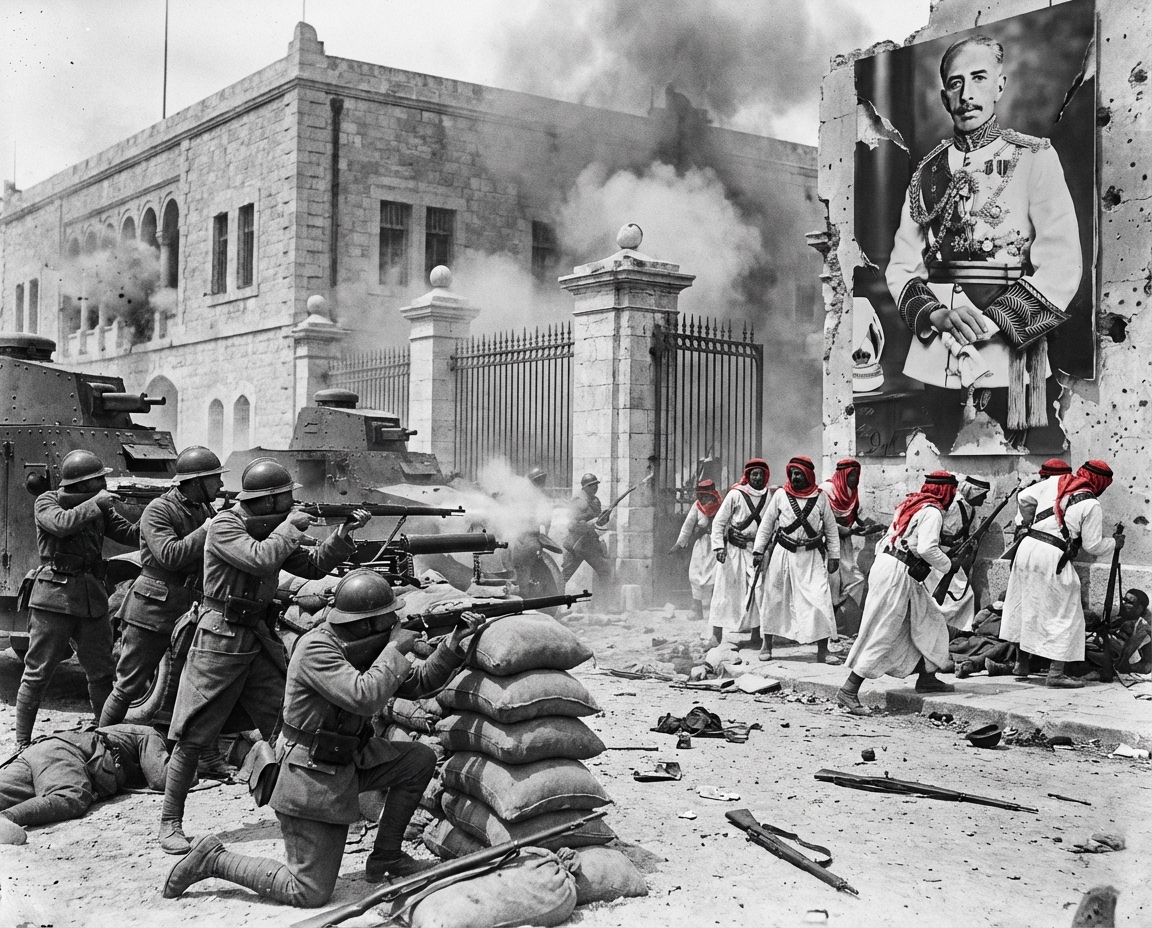
1958 Early Medieval Period The Iraqi Revolution and the End of the Monarchy
& Migrations
In 1958, a military-led revolution in Iraq resulted in the assassination of King Faisal II and the overthrow of the Hashemite monarchy. This event marked the establishment of a republic and ushered in a new era of political leadership that reshaped Iraq’s direction and its role in the region.
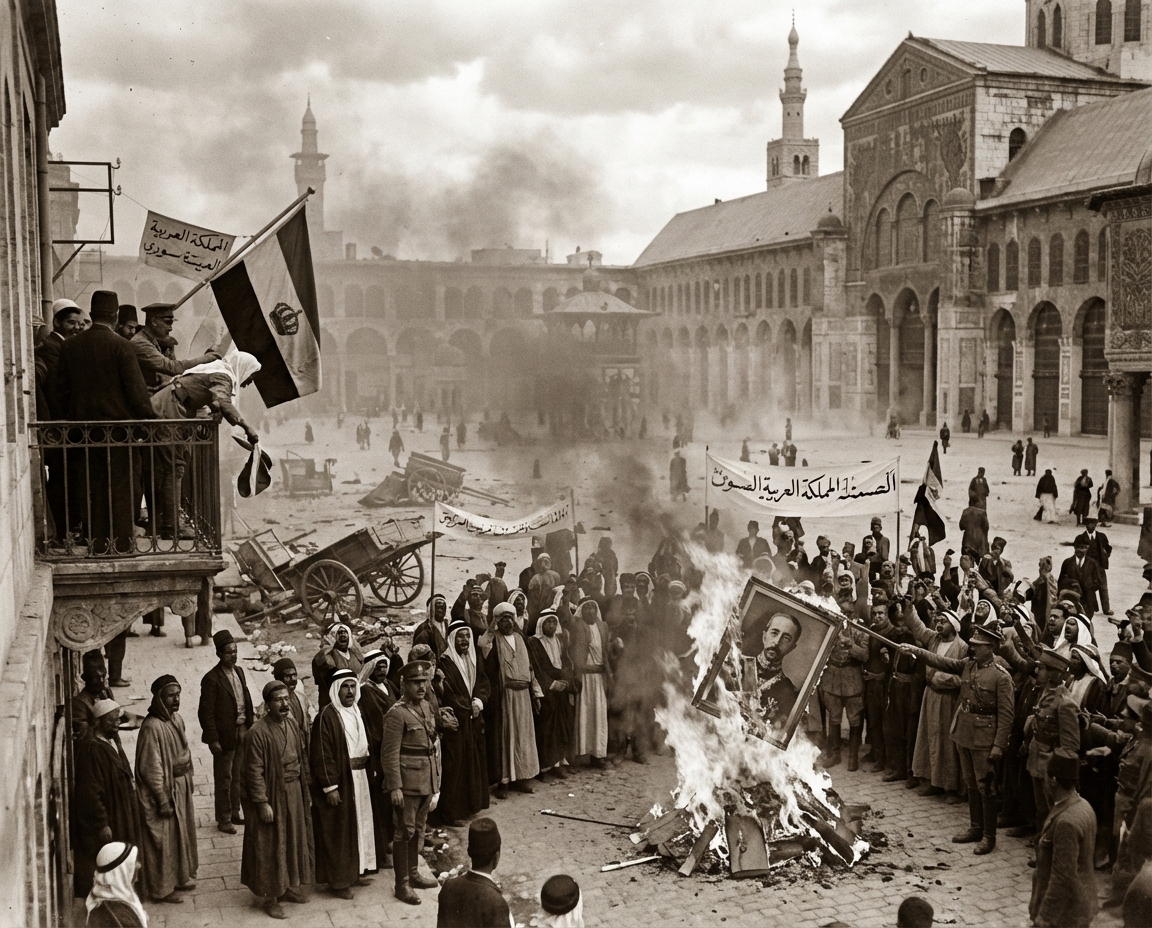
1951 King Talal Ascends the Jordanian Throne
In 1951, following the assassination of King Abdullah I, his son King Talal became the new king of Jordan. His brief reign included significant constitutional reforms that helped shape the framework of Jordan’s modern government before he later abdicated the throne.
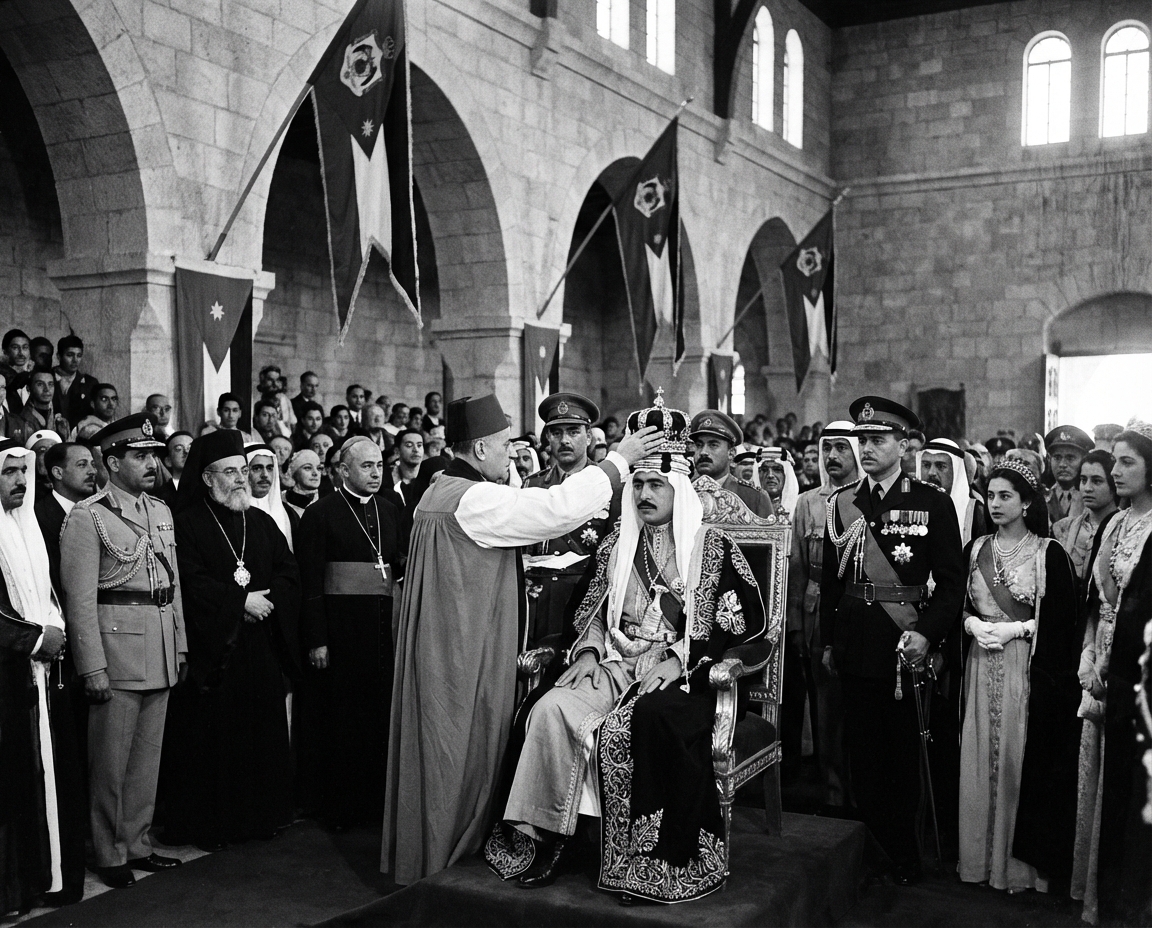
1951 The Assassination of King Abdullah I
In 1951, King Abdullah I of Jordan was assassinated on the Temple Mount in Jerusalem by a Palestinian gunman opposed to his diplomatic efforts and perceived willingness to pursue peace with Jewish leaders. His death marked a pivotal moment in the region’s political history and underscored the deep tensions surrounding the future of Jerusalem and Arab-Israeli relations.
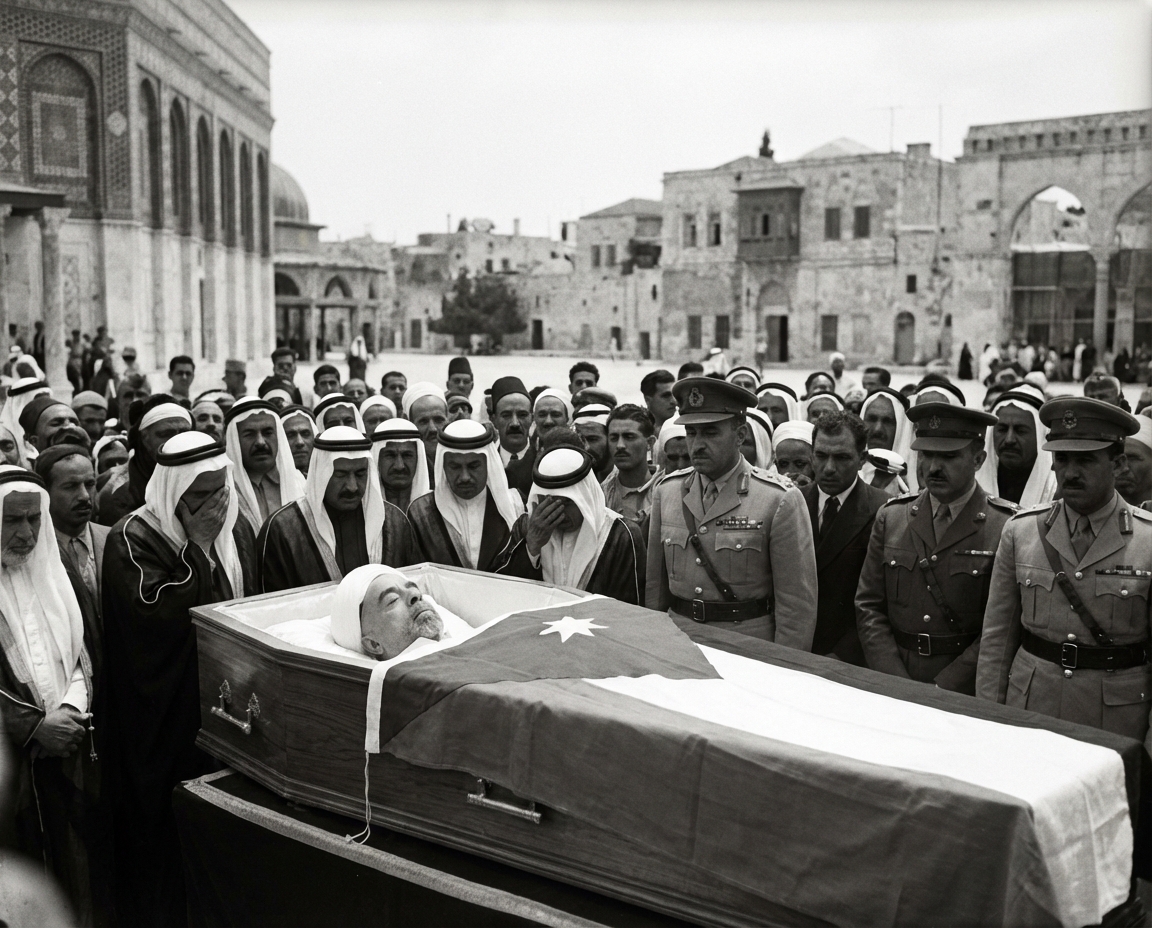
Post 1948: King Abdullah I and Efforts Toward Regional Peace
King Abdullah I sought to engage with Jewish leaders in efforts to establish stability and peace in a region where the Hashemite Kingdom of Jordan held significant influence and respect among many Arab communities. His diplomatic approach reflected attempts to navigate the complex political realities of a rapidly changing Middle East.
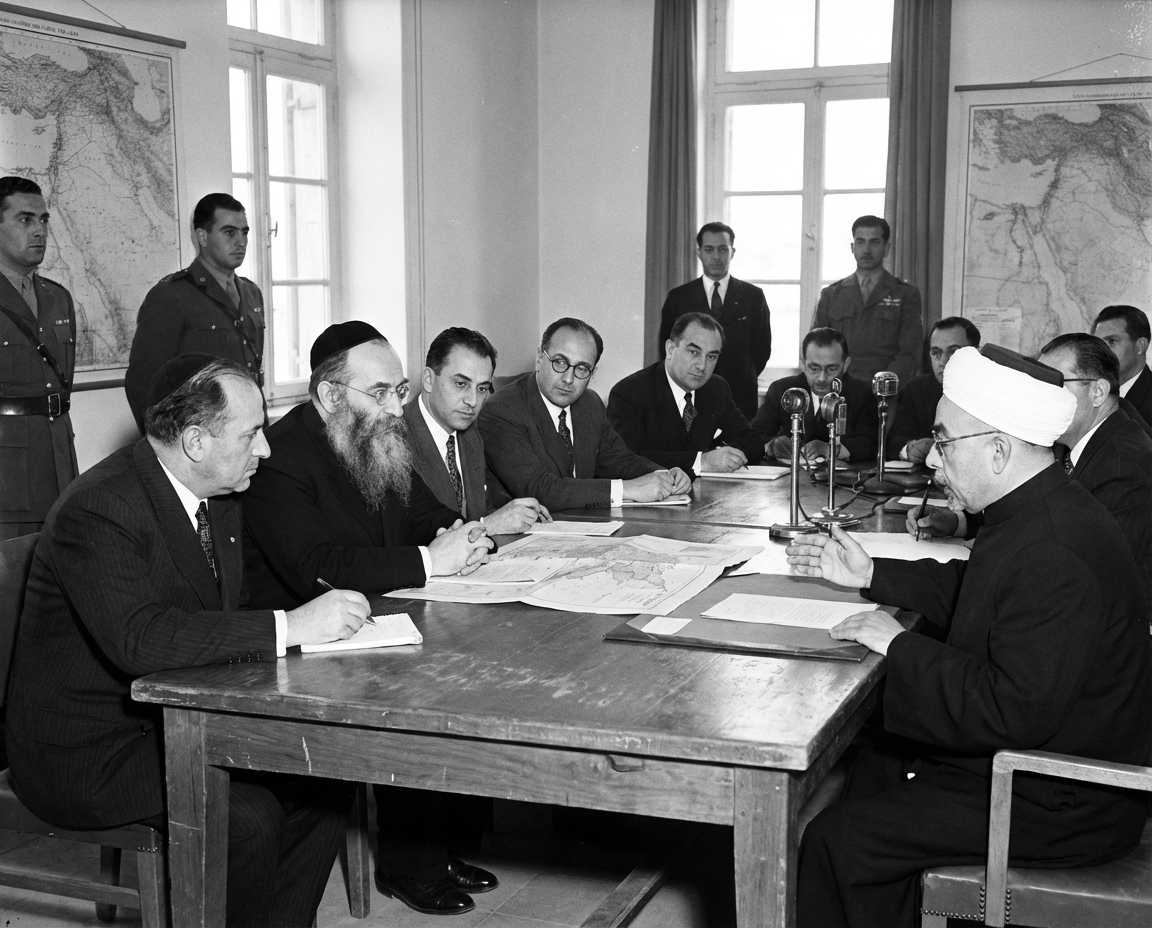
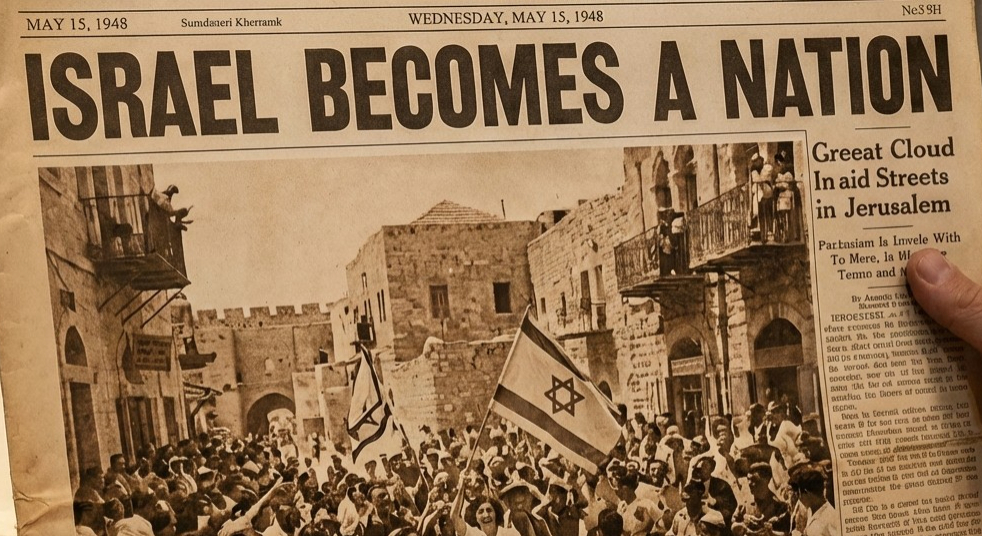
1948 Israel Becomes A Nation
In 1948, Israel was reestablished as a nation, an event many Christians view as the fulfillment of biblical promises that God would gather His people back to their land after their dispersion following the Roman destruction of Jerusalem in AD 70. Passages such as Zechariah 8:7 “Thus says the Lord of hosts: ‘Behold, I will save My people from the land of the east And from the land of the west;" are often cited, expressing God’s promise to bring His people from the east and the west and restore them to dwell securely in their homeland.
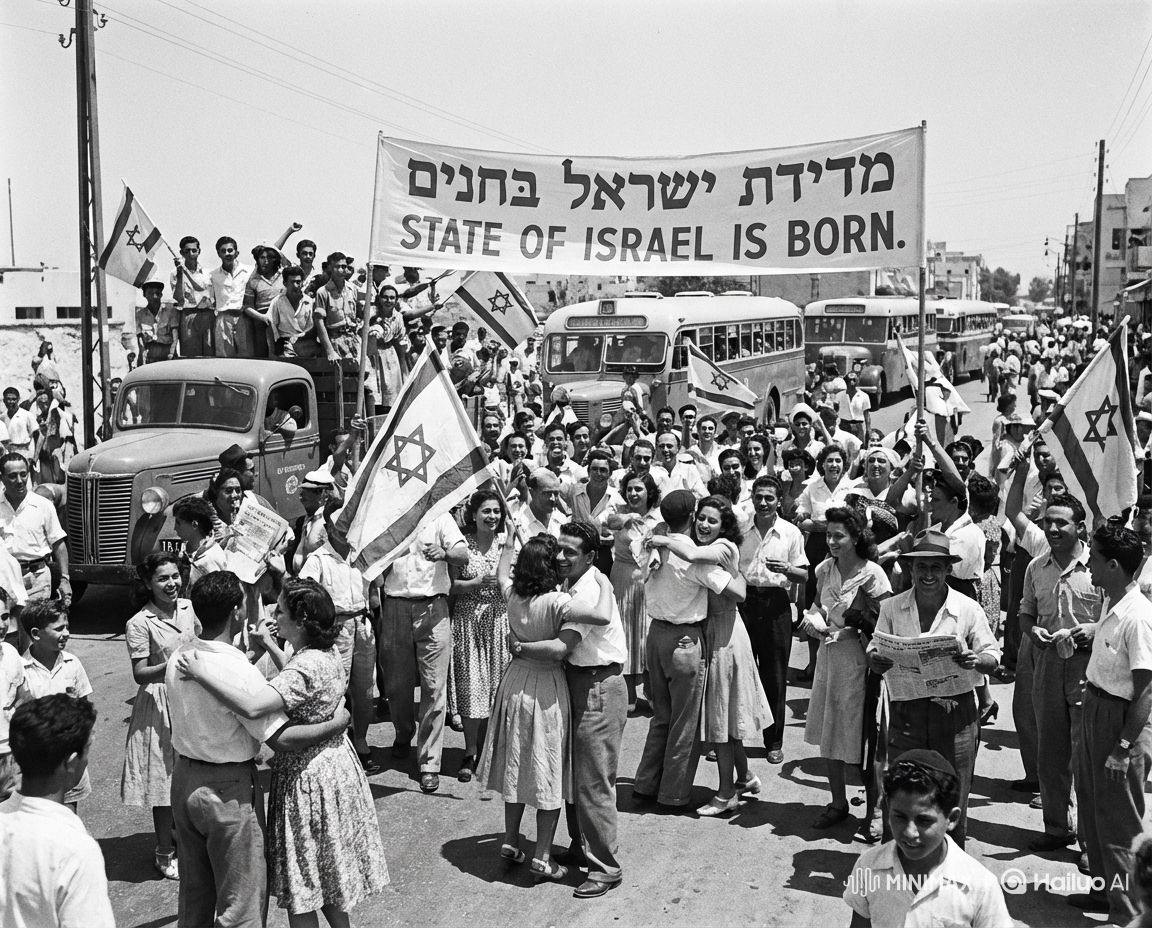
1939-1958 Pope Pius XII and a World in Transition
During this period, Pope Pius XII led the Roman Catholic Church from 1939 to 1958. His papacy spanned World War II and the early Cold War years, as the Church navigated global conflict, shifting political powers, and a rapidly changing international landscape.
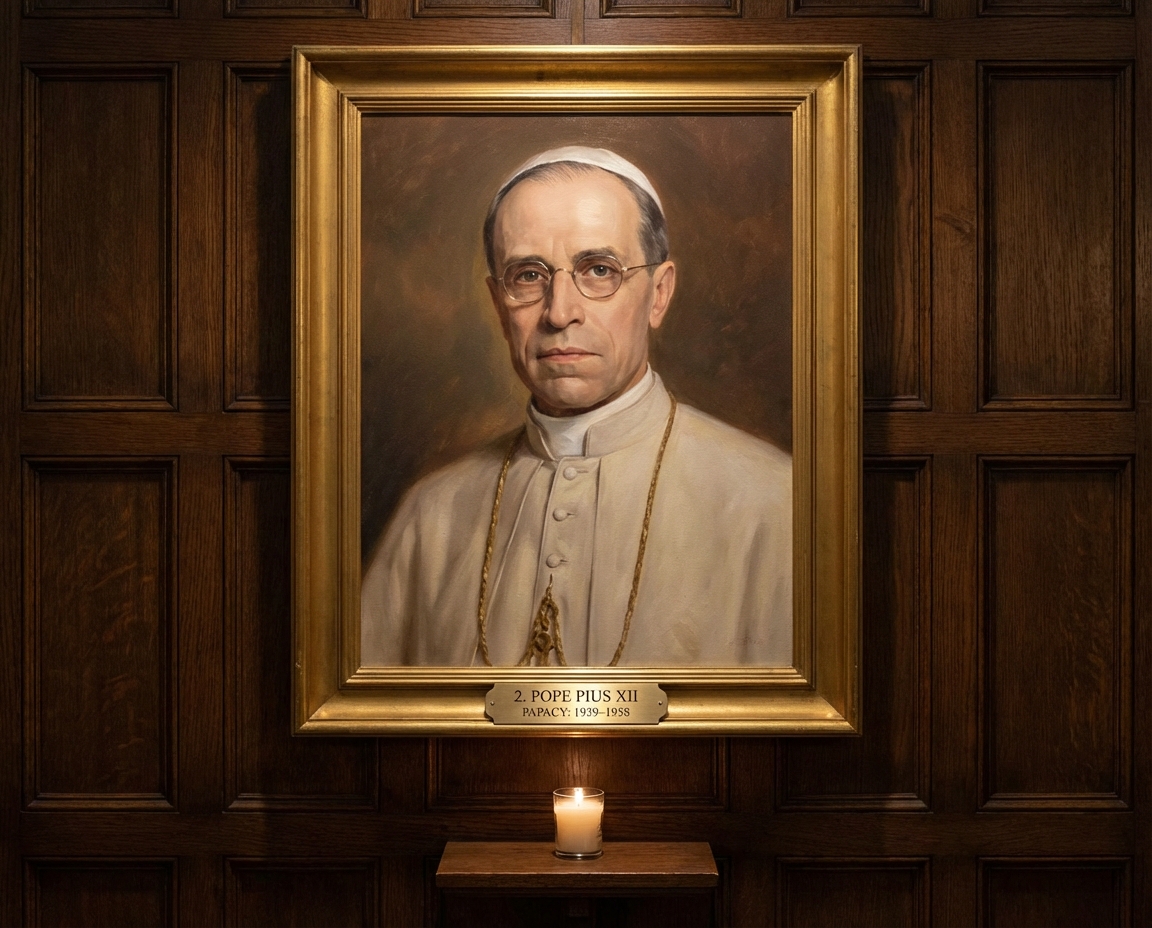
1924-1925 The Rise of the House of Saud
The House of Saud rose to power and defeated the Hashemites in the Hejaz, resulting in the loss of that territory, including Mecca. This shift led to the formation of Saudi Arabia and established the Saudi leadership as the custodians of Islam’s holiest sites, marking a major turning point in the political and religious landscape of the Arabian Peninsula.
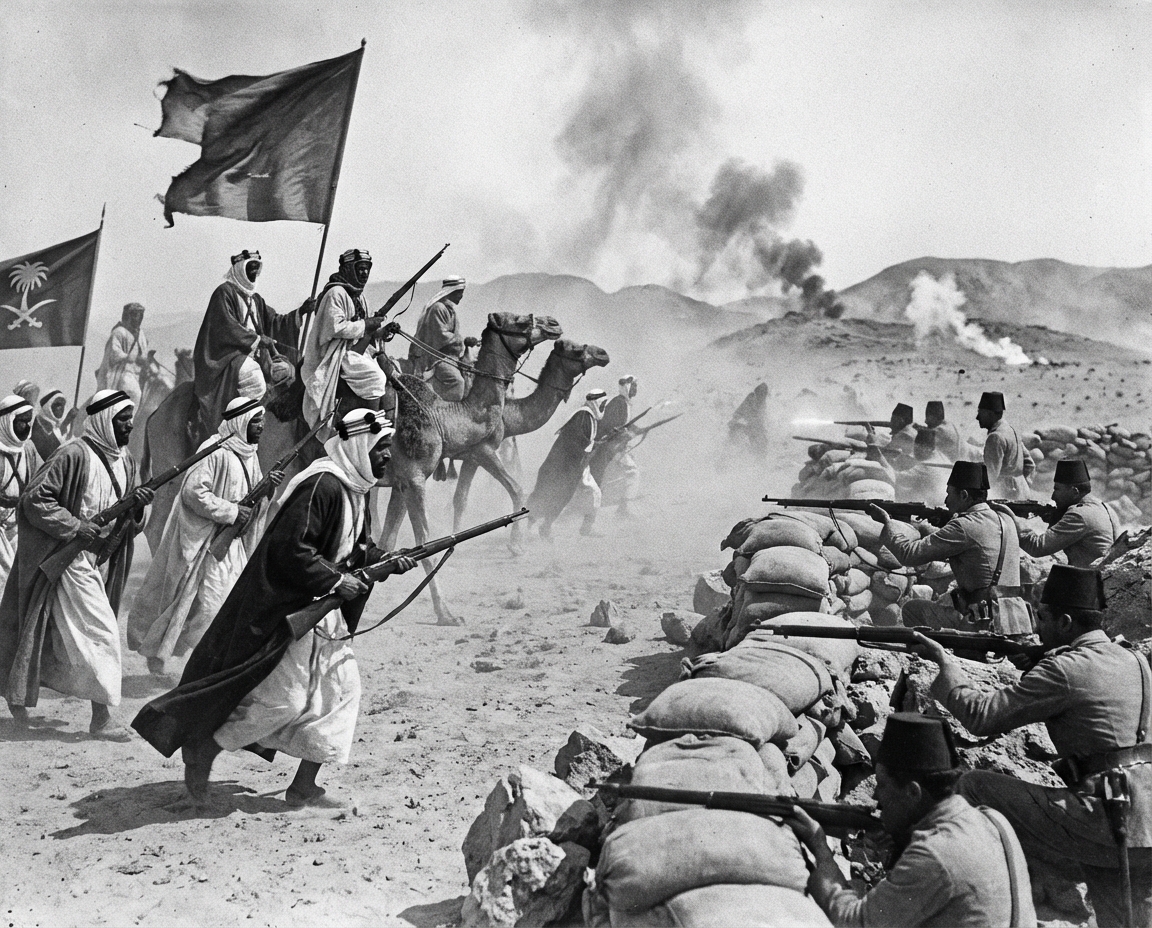
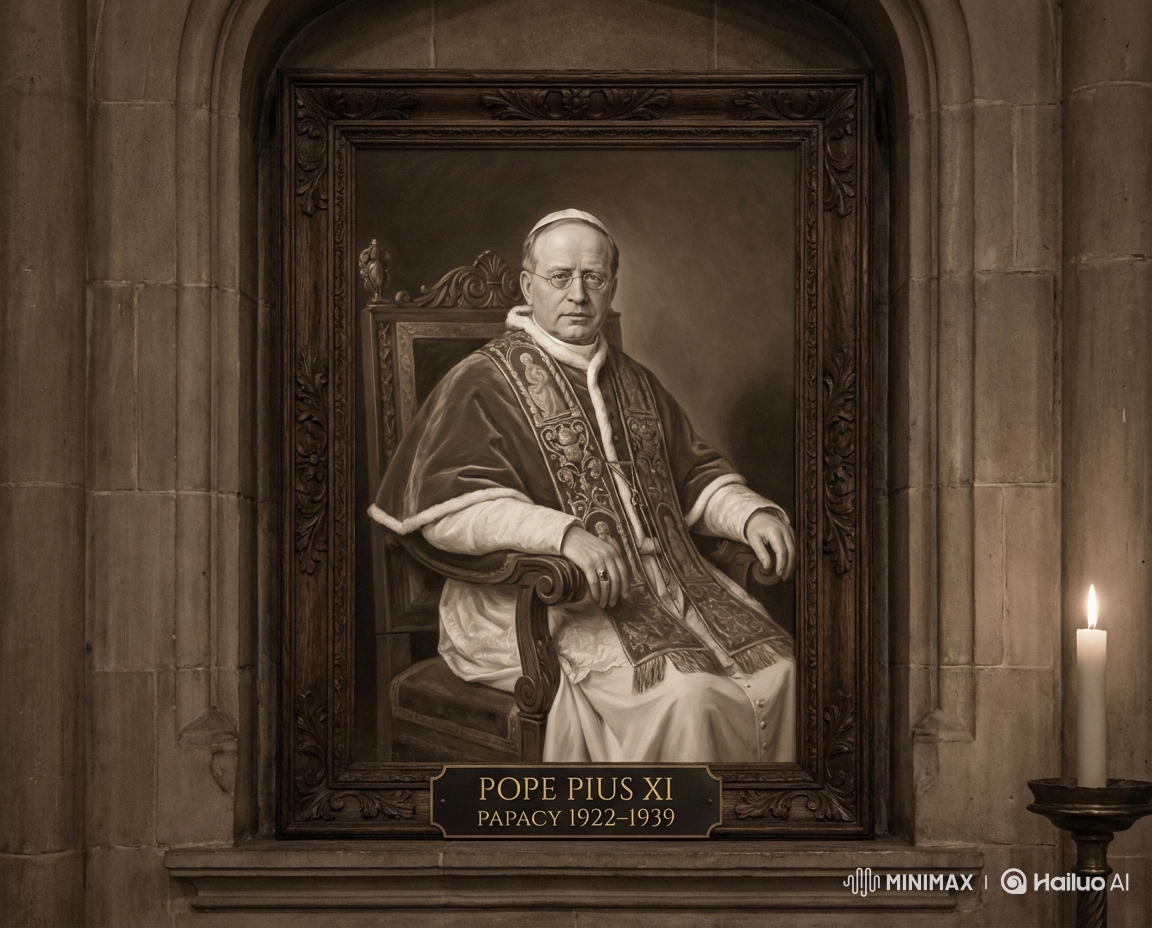
1922-1939 Pope Pius XI and the Interwar Era
During the rise of Hashemite influence in the Middle East, Pope Pius XI led the Catholic Church from 1922 to 1939. His papacy unfolded during a period of significant global change, as new nations emerged, political alliances shifted, and religious institutions navigated the challenges of the interwar world.
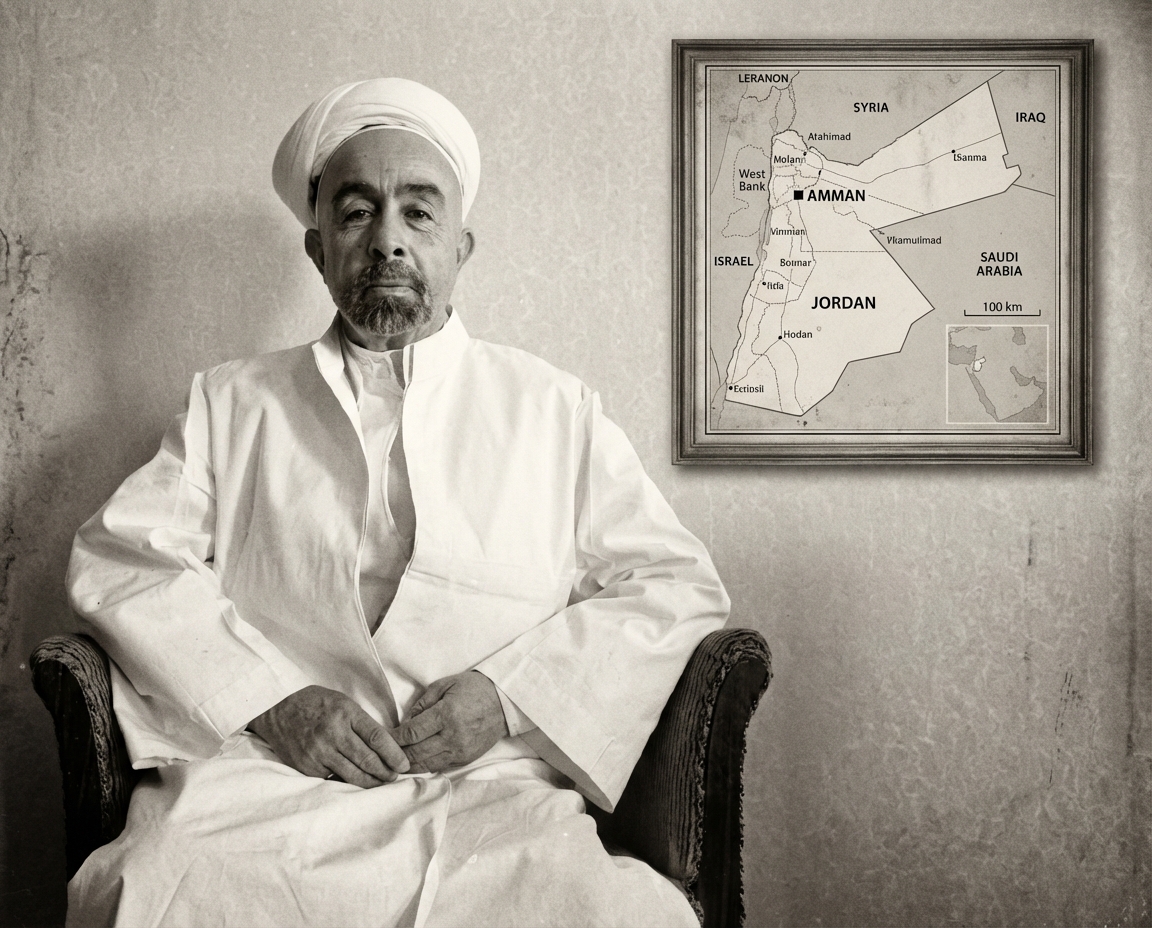
1946 King Abdullah I and the Founding of Jordan
King Abdullah I established his kingdom in Transjordan, working to build relationships with local communities and tribal leaders while shaping a new political vision for the region. His leadership laid the foundation for the modern Jordanian state and the continuing Hashemite presence in Middle Eastern affairs.
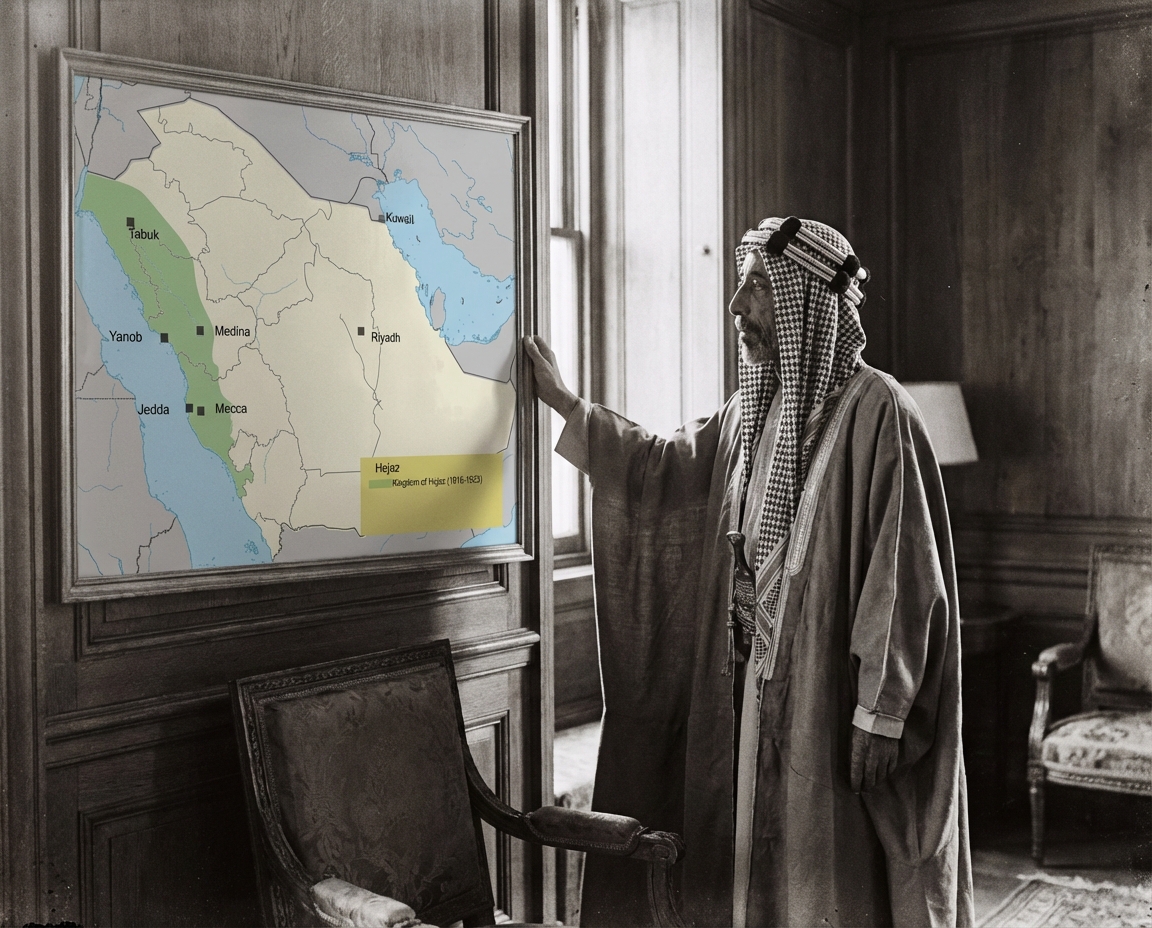
1924 King Ali and the Rule of the Hejaz
Ali bin Hussein bin Ali al-Hashimi became King of the Hejaz, assuming authority over a region that included the holy cities of Mecca and Medina. His rule represented the continuation of Hashemite leadership in the Arabian Peninsula during a period of major political and religious transition.
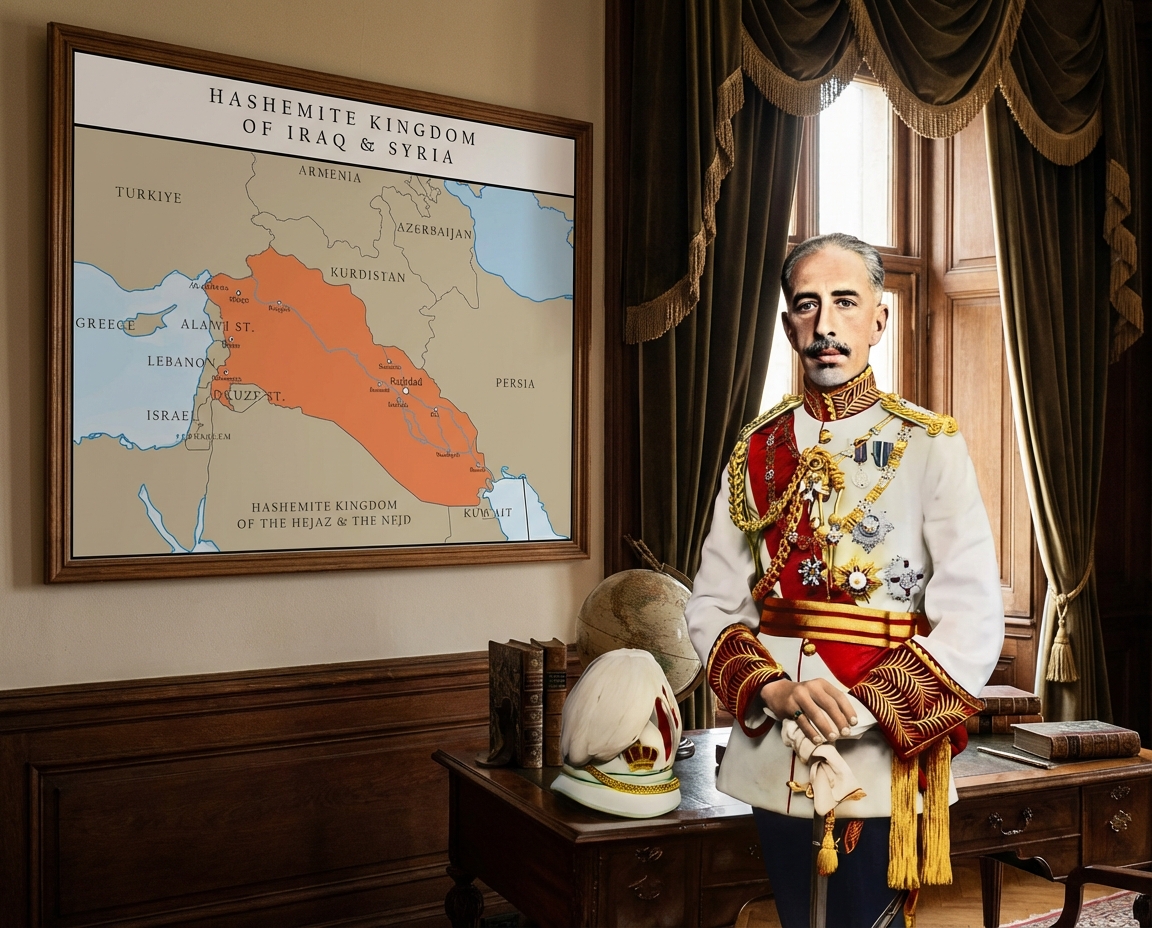
1920-1921 King Faisal of Iraq & Syria and the Expansion of Hashemite Influence
The son of Sharif Hussein, King Faisal rose to power in Syria and later Iraq, extending Hashemite influence across key regions of the Middle East. His leadership represented an effort to expand the reach of the Hashemite vision and strengthen Arab governance in territories emerging from the collapse of Ottoman rule.
1923 The Rise of Sharif King Hussein and the Hashemite Vision
Sharif Hussein bin Ali emerged as a central leader in the aftermath of the Ottoman decline, proclaiming the Hashemite Kingdom of Hejaz and asserting his role as a leading Arab ruler. As a descendant of the Prophet Muhammad, he sought broader recognition across the Muslim world, positioning himself as both king and a unifying figure for Arab independence in the reshaped Middle East. He was the Sharif of Mecca (1908–1916)
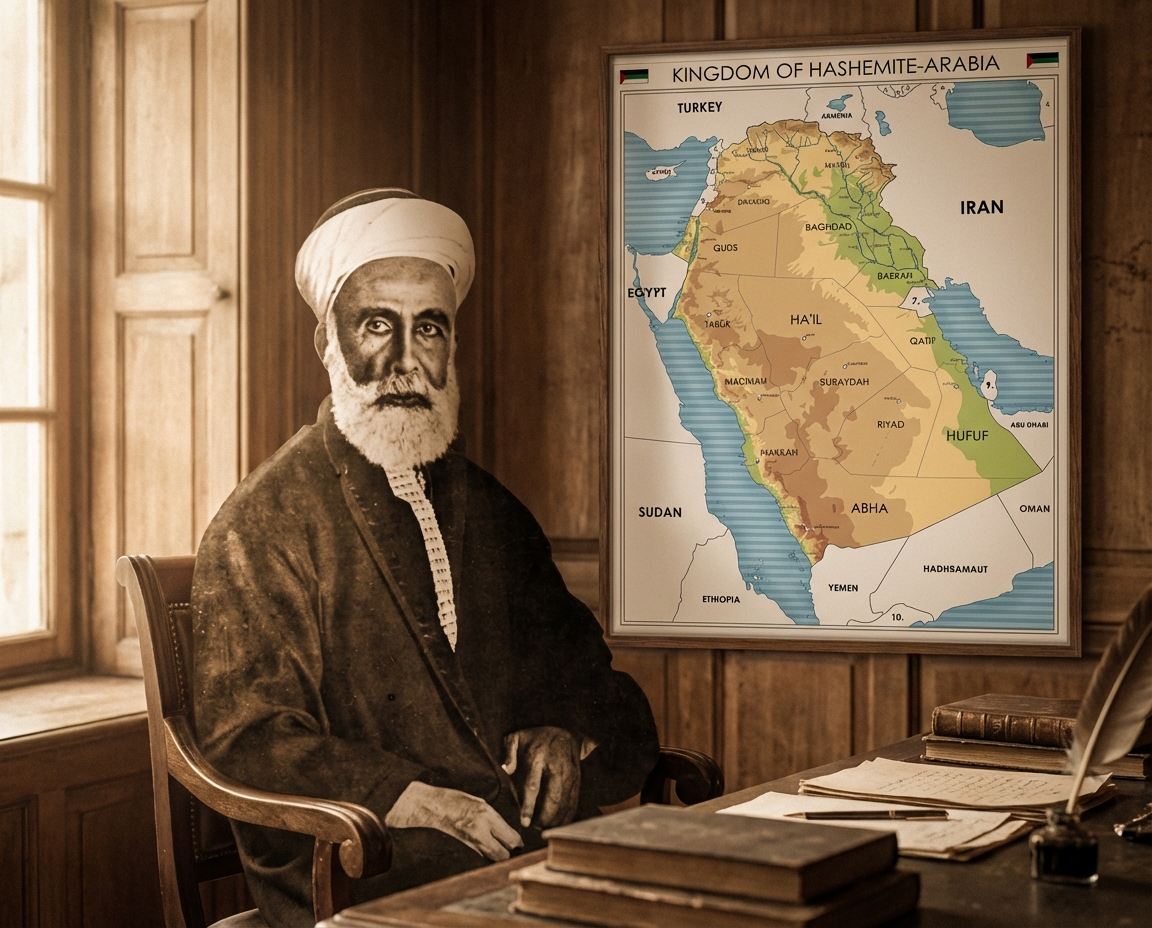
1922 The Ottoman Surrender and a New Middle East
With its defeat and surrender at the end of World War I, the Ottoman Empire lost control of the Middle East, opening the door for new political powers, mandates, and emerging nations to shape the region’s future.
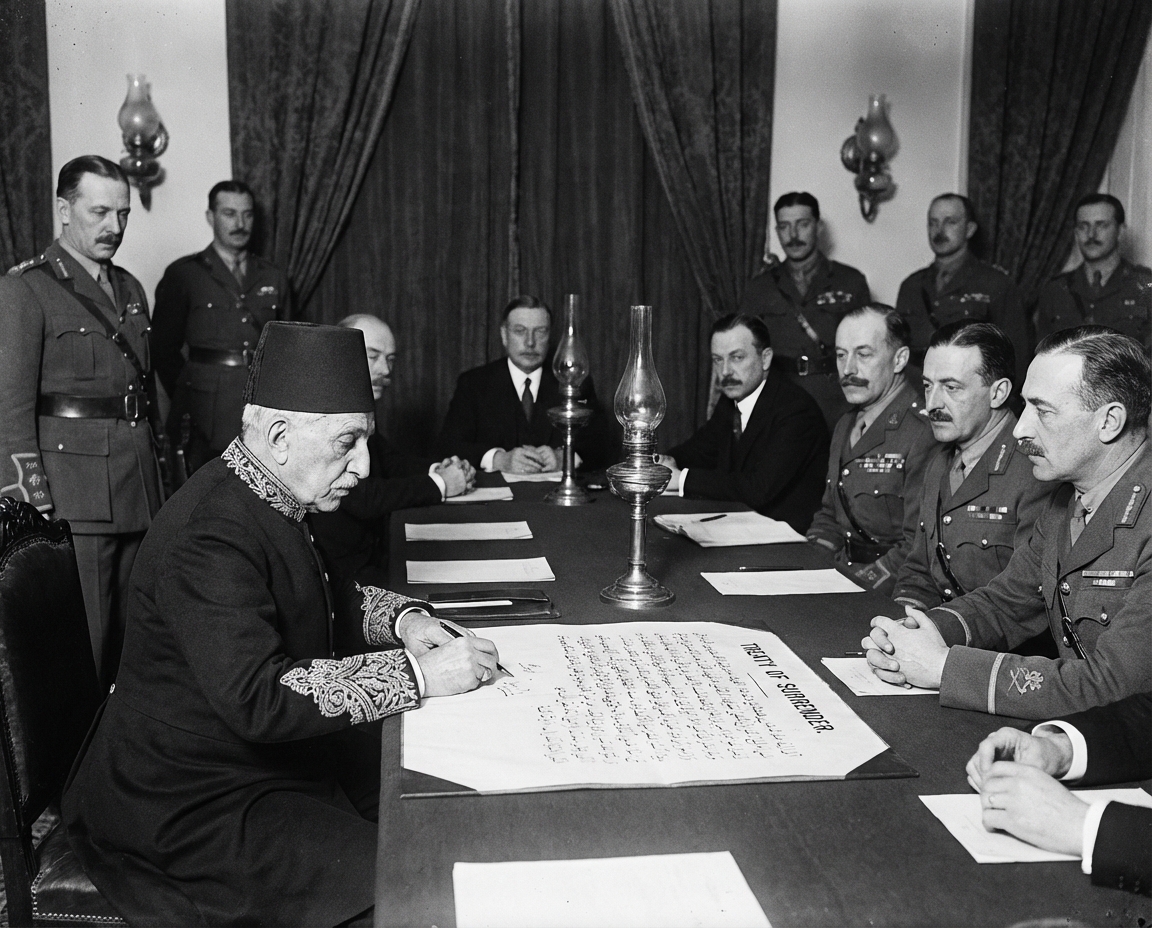
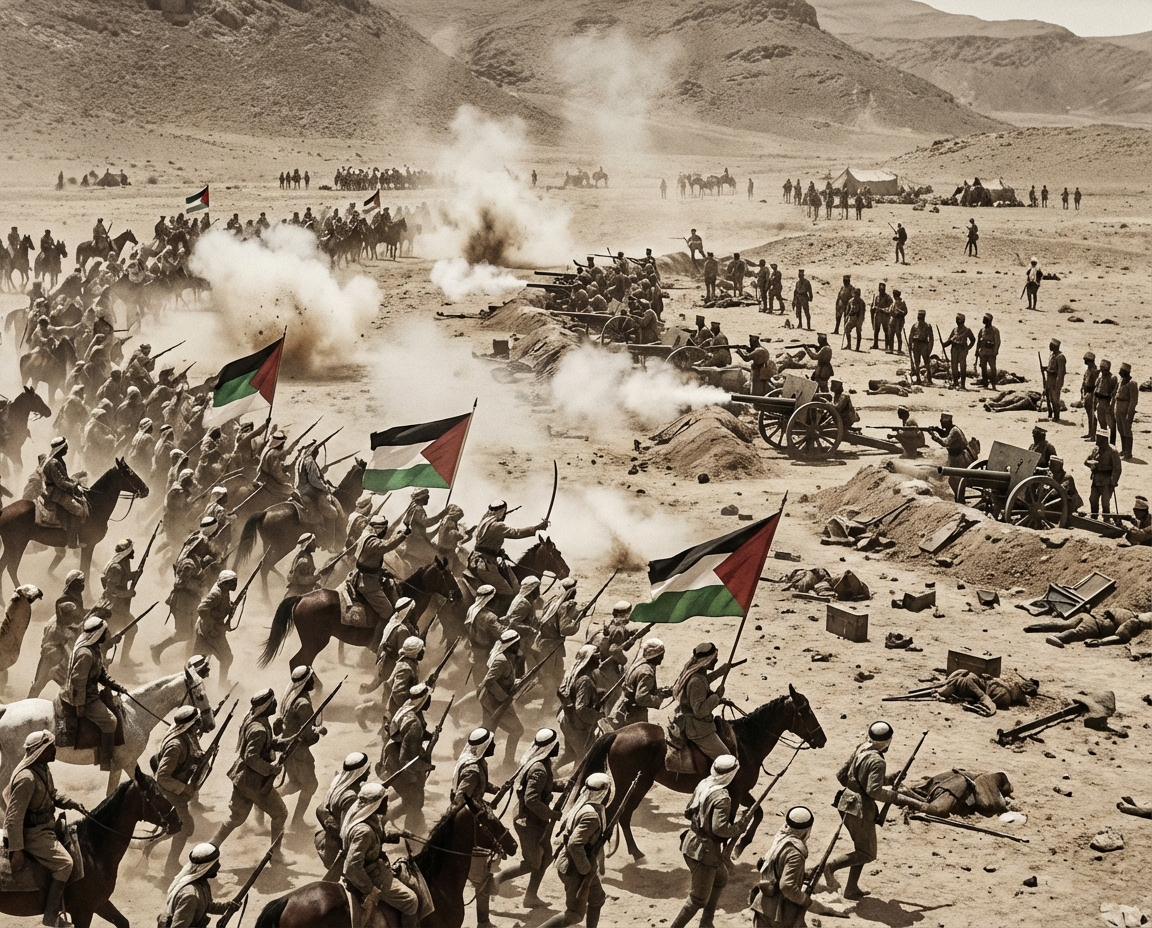
1916-1918 The Arab Revolt: Europeans & Arabs
Join Forces To Defeat The Ottomans
The Ottoman Empire rose to become a dominant power across the Middle East, North Africa, and parts of Europe for centuries. Its decline accelerated during World War I, when the Arab Revolt—supported by British and French forces—helped bring about the empire’s collapse, leading to the loss of Ottoman control over much of the Middle East and the reshaping of the region’s political landscape.
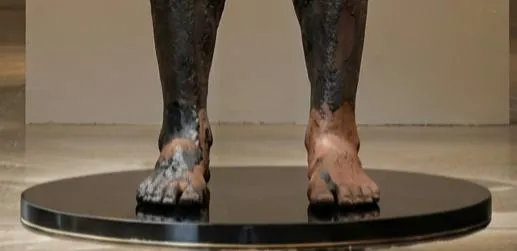
Feet Mixed With Iron & Clay: The Modern Era Of Europe & The Middle East
Arabs and European powers formed alliances against the Ottoman Empire, coordinating efforts from multiple fronts to weaken and ultimately defeat Ottoman rule. This cooperation is often viewed through a prophetic lens as reflecting the recurring pattern of dual powers seen in Daniel’s imagery—such as the silver arms of the Medes and Persians and the iron legs of the Eastern and Western Roman Empires—suggesting the final stage symbolized by the statue’s feet may likewise point to interconnected regions, including Europe and the Middle East.
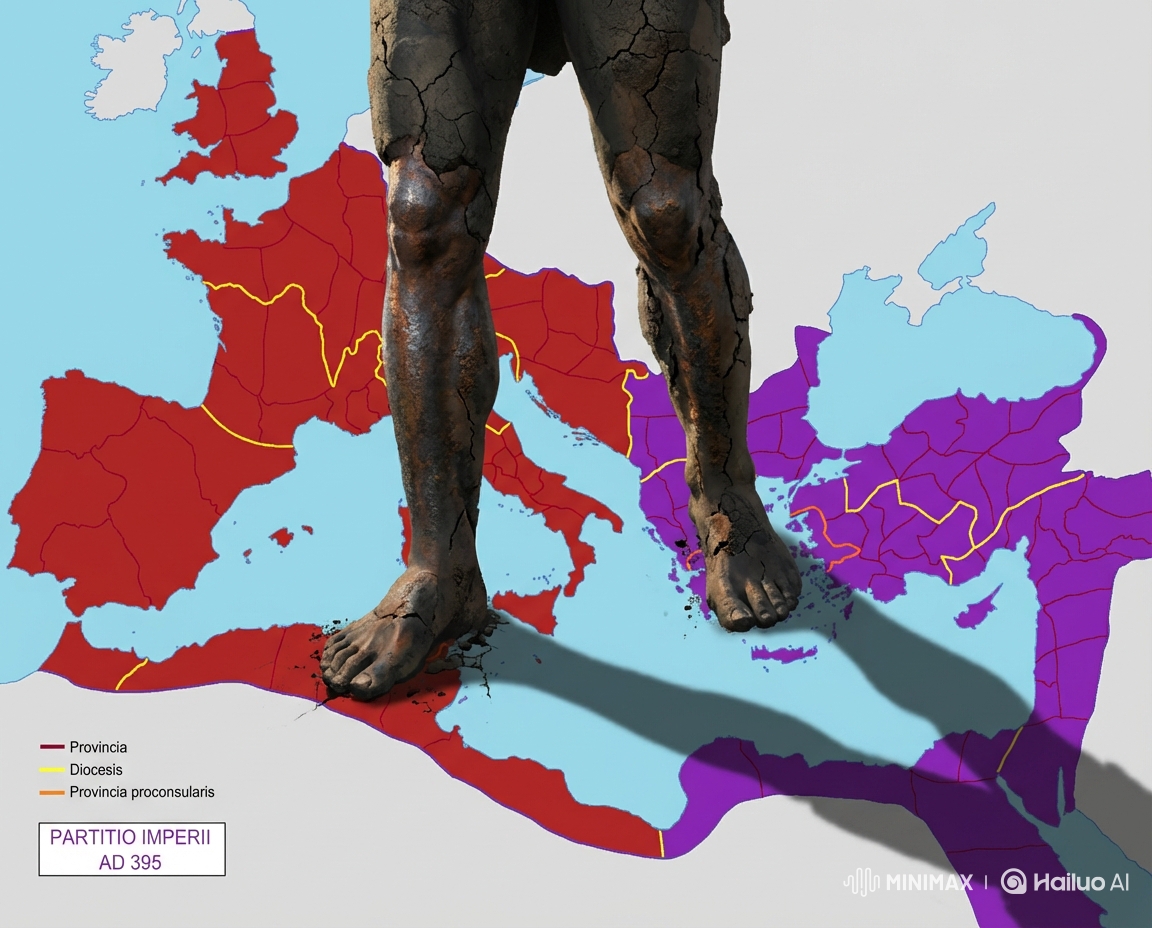
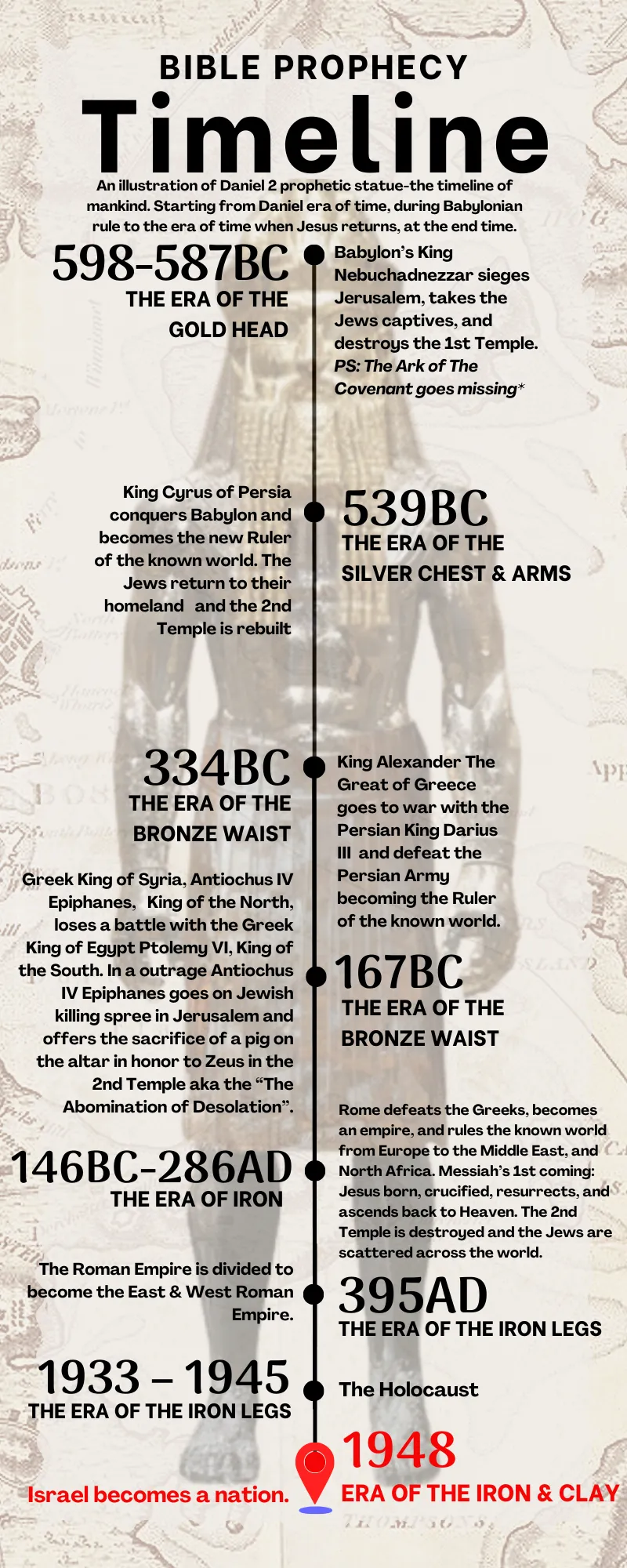
395 AD The Division of the Roman Empire
In AD 395, strained by the vastness of its territory, the Roman Empire formally divided into the Western and Eastern Roman Empires, ruling from Rome and Constantinople. This historical split is often seen as reflecting the imagery in Daniel 2 of the statue’s two legs of iron, symbolizing the continuation of Roman power in two distinct spheres.
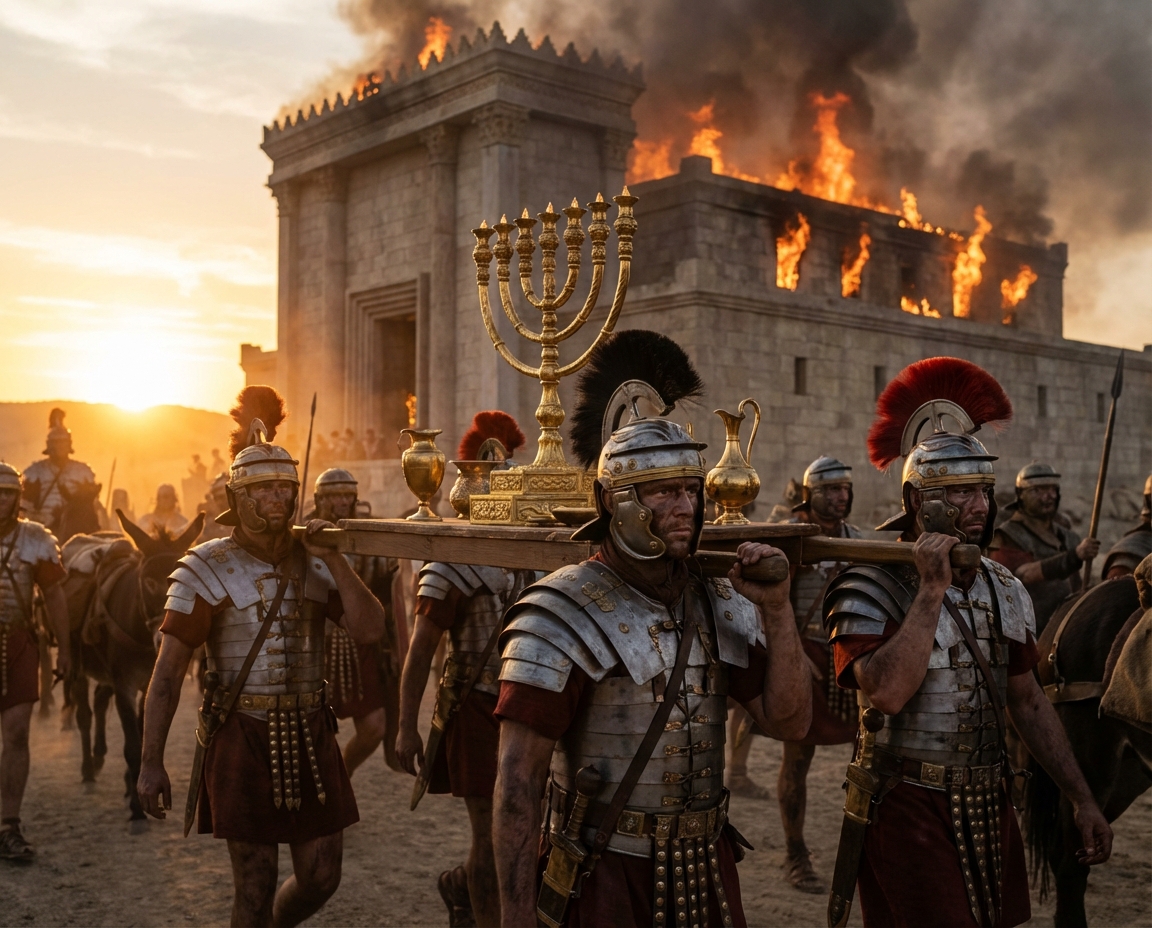
70AD Romans Destroys Jerusalem
In AD 70, General Titus destroyed Jerusalem and carried the Second Temple’s artifacts back to Rome, fulfilling Jesus’ prophecy that the temple would be so completely destroyed that not one stone would be left upon another.
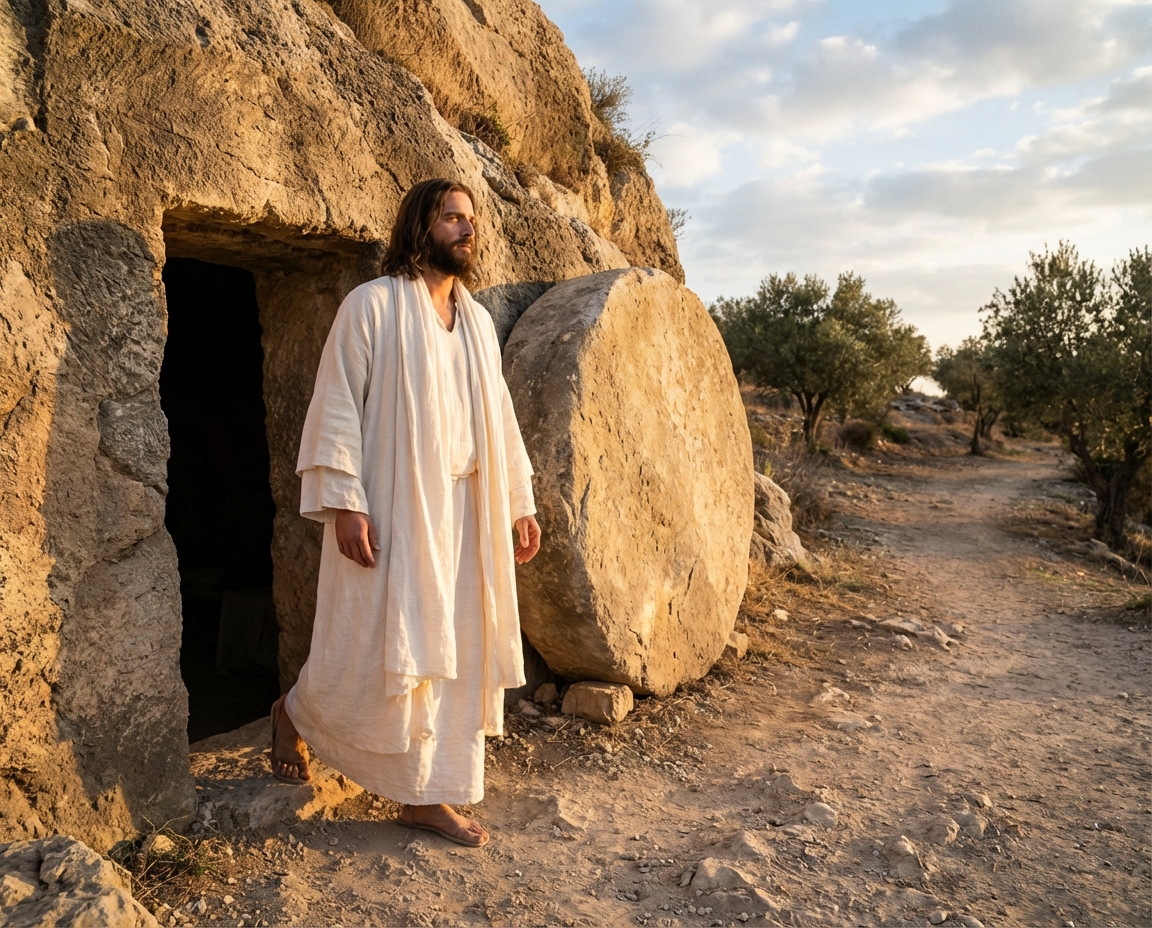
33AD Jesus Rises From The Dead
Jesus fulfilled prophecy through His resurrection, satisfying the justice of God and ushering in the age of the Church, where salvation is offered to all who believe in the Son of God. Scripture teaches that if one confesses with their mouth that Jesus is Lord and believes in their heart that God raised Him from the dead, they will be saved.
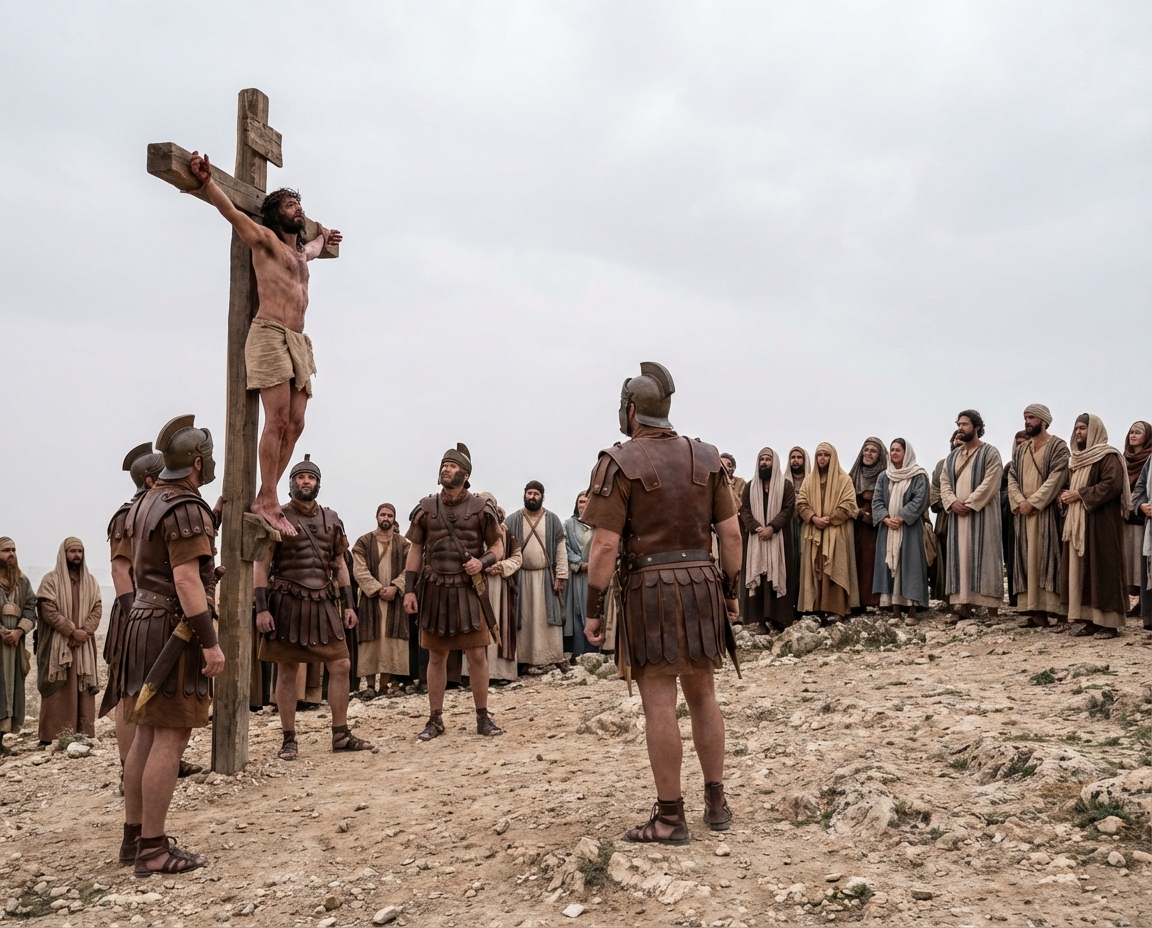
33AD Jesus Is Crucified
Jesus fulfilled the prophecies of the Messiah by becoming the sacrificial Lamb of God, offering His life to atone for the sins of the world through His crucifixion.
0AD - 33AD Jesus Comes Into The World & Testifies He Is The Son of God-The Christ
Jesus entered the world during the era of the Roman Empire, when the gospel of the Son of God was revealed. Through His teachings, miracles, death, and resurrection, He established the new covenant—bearing witness that He is the only way to God and that salvation is found in His name alone.
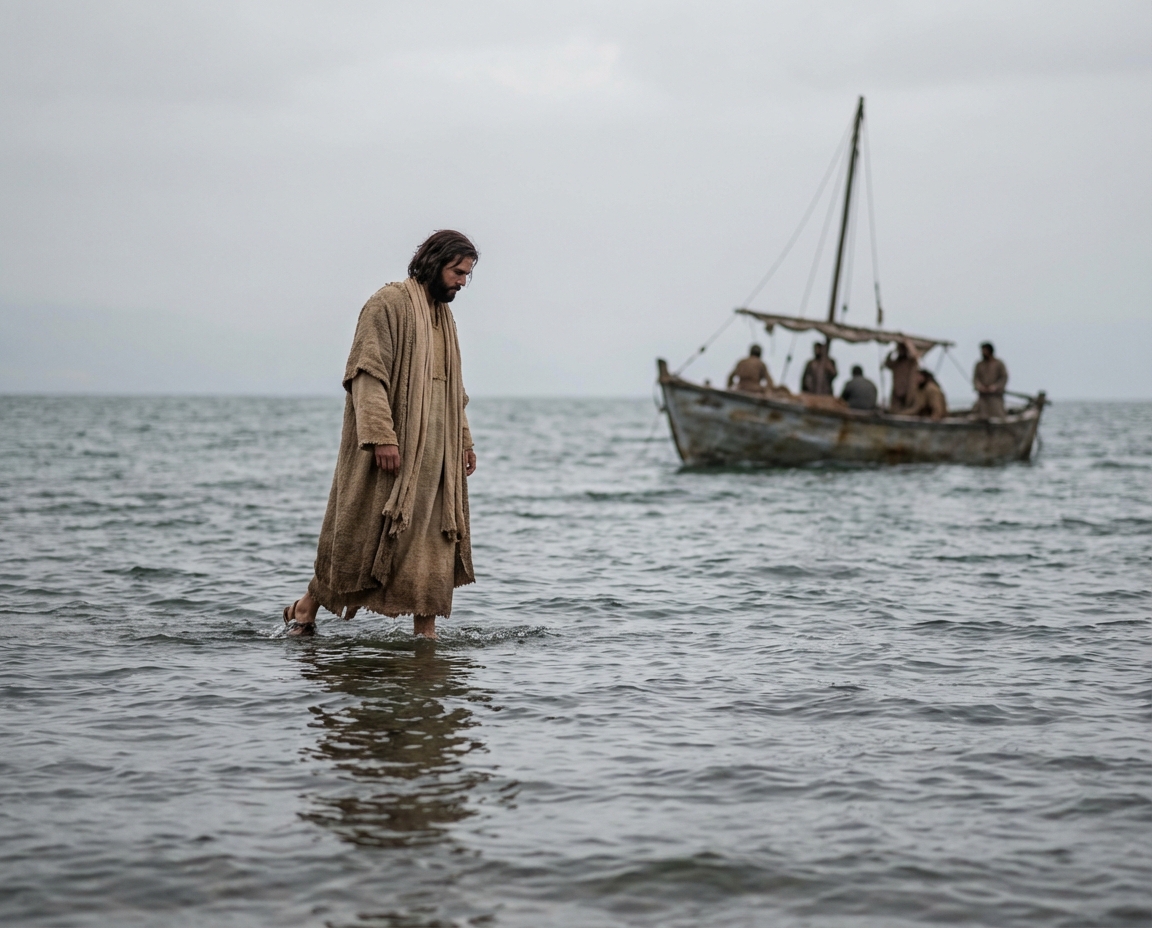
146BC -286BC The Roman Empire
After Alexander the Great died, his empire fractured into multiple kingdoms ruled by Greek leaders. Ongoing conflict among these successor states weakened their power, paving the way for the rise of the Roman Empire, which absorbed the Greek territories and became the dominant ruling power.
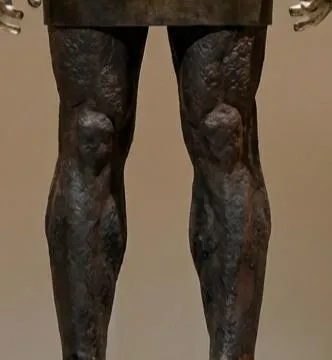
334BC - 167BC Bronze Waist - The Greek Kingdom
The Persian Empire eventually lost its dominance with the rise of King Alexander the Great, who advanced his forces from west to east and came to rule the known world of his time, fulfilling the prophecy symbolized by the statue’s waist of bronze.
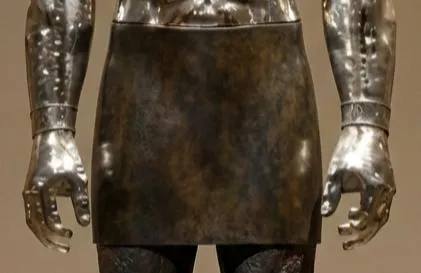
539BC Silver Chest & Arms - The Persian Empire
The Babylonian kingdom was later conquered by the Persian Empire under King Cyrus, fulfilling the prophecy of the statue’s chest and arms of silver—symbolizing the united power of the Medes and Persians as the next world empire in the prophetic sequence.
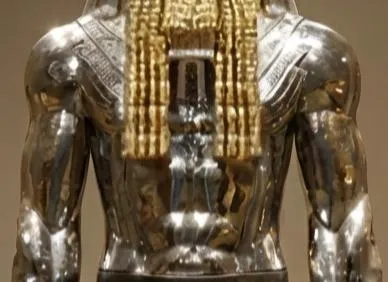
598-587BC The Gold Head - The Babylonian Kingdom
In Daniel 2, the prophet explains that the head of gold represents the present world power of his time—the Babylonian Empire—ruled by King Nebuchadnezzar, the dominant kingdom through which God began revealing the prophetic sequence of future empires.
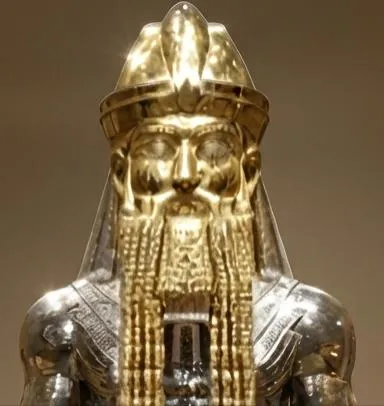
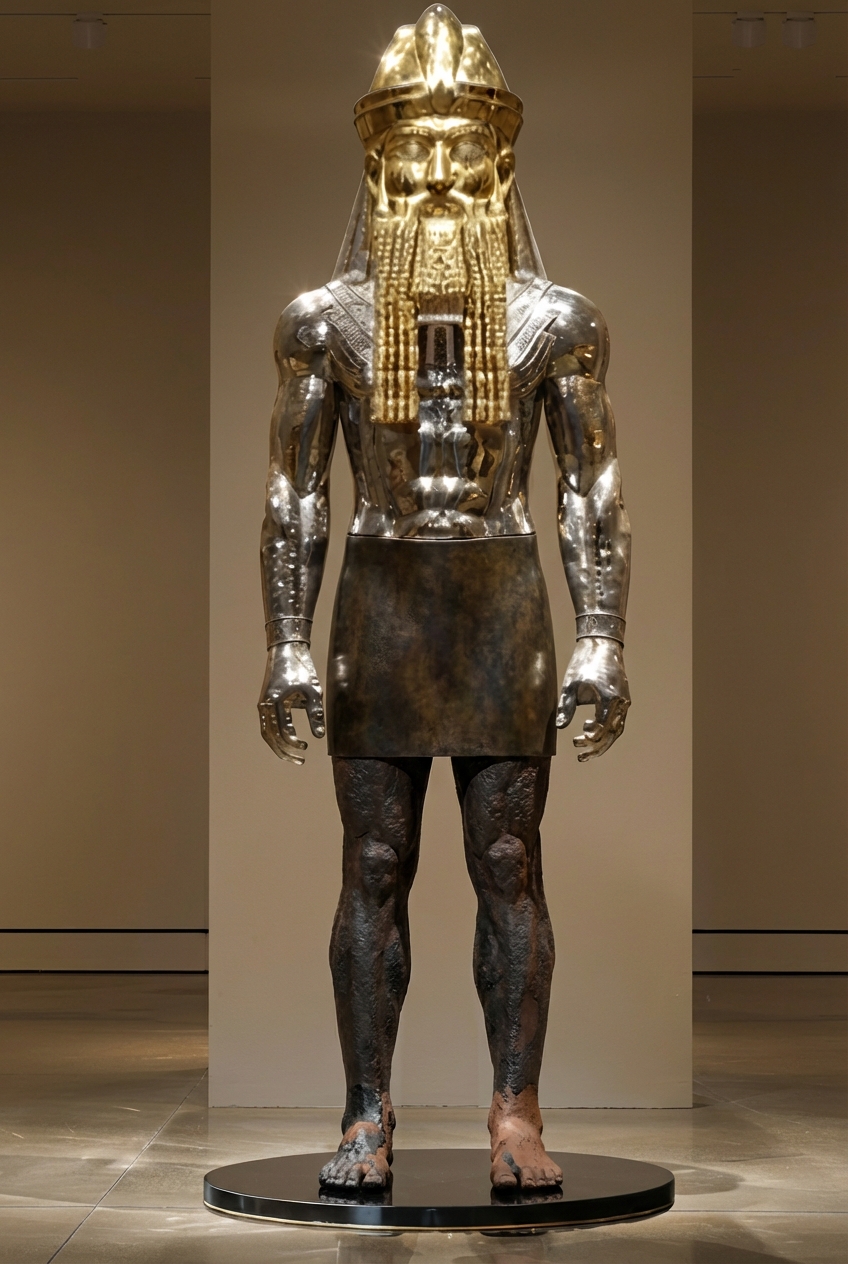
Daniel 2 End Time Prophetic Statue
Daniel 2 is a foundational starting point for tracking Bible prophecy because it marks the moment when God reveals the timeline of world history from Daniel’s era to the end of the age. Through the prophetic statue, Scripture outlines successive earthly kingdoms that lead to the final stage of human rule, culminating in Christ’s return to establish His eternal kingdom over the earth.
Subscribe For The Latest Videos
Stay up-to-date with all our latest episodes, exclusive updates, and deep dives into the world of bible prophecy. Subscribe now and get notified whenever new content drops—right at your fingertips!
Newsletter

The Revelation Watchman
Support
CUSTOMER CARE
LEGAL
FOLLOW US


Copyright 2026 NDUR Watchman LLC. All Rights Reserved.