Jesus said, "And what I say to you, I say to all, Watch!” - Mark 13:37
UNFULFILLED PROPHECIES
UNFULFILLED PROPHECIES
What Does the Bible Say About Unfulfilled Prophecies?
The Unfulfilled Prophecies section highlights biblical predictions that many believers understand as future events, offering a framework for watching how Scripture may intersect with world developments. By examining passages about global leadership shifts, spiritual deception, persecution, and the return of Christ, this page helps readers recognize themes and patterns the Bible presents as still ahead.
Rather than setting dates or certainties, the goal is to encourage discernment, prayer, and careful study of Scripture alongside current events. As visitors explore these prophecies, they are invited to remain watchful, strengthen their faith, and grow in awareness of how unfolding history may align with the biblical narrative of the last days. Remember Jesus even warns us the consequence of not watching God's propheceis "Remember therefore how you have received and heard; hold fast and repent. Therefore if you will not watch, I will come upon you as a thief, and you will not know what hour I will come upon you." - Revelation 3:3
POPE FRANCIS RESURRECTION & The Prophetic Timeline To The 3rd Temple
YouTube
May 12, 2026
What if the timeline to the 3rd Temple has already been revealed in Scripture? In this video, we break down a prophetic timeline.
Don't Forget to order my book
6TH Millennium Series - 1st Chronicles
The Falling Away
A Book Authored By West "Watchman" Brooks
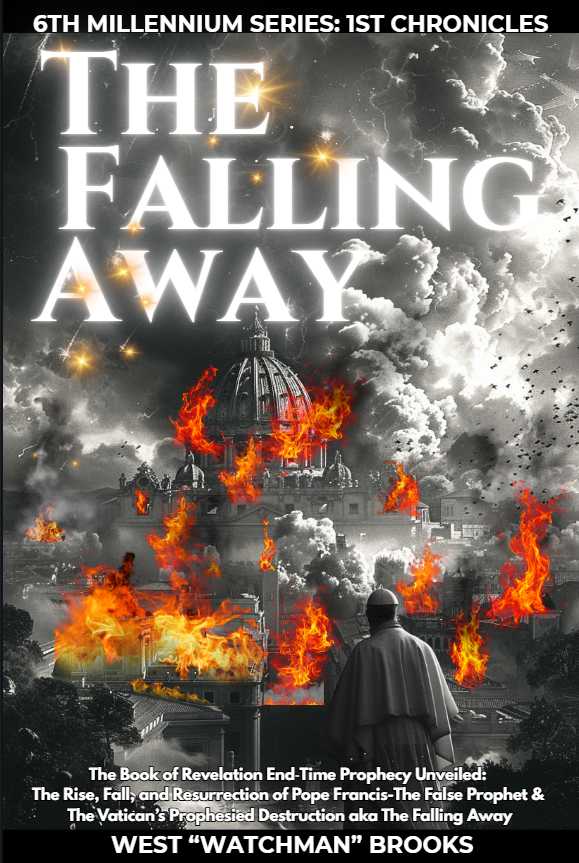

Here's what you get:
Deep Biblical Analysis
Clear explanations of Revelation that connect scripture with real world events.Historical Evidence & Timelines
Discover key events involving the Vatican, world leaders, and prophecy that most churches never discuss.Prophecy Charts & Visual Guides
Easy-to-understand diagrams showing how Revelation 17 may already be unfolding.A New Perspective on “The Falling Away”
Learn why the biblical “falling away” may refer to a prophetic event involving the Vatican.
Reviews
"Wow! This book is beyond informative, with proof in history events backed up with scripture. The way the author wrote this book is an easy read for any Bible prophesy beginner like me. It give the reader the opportunity to to do their own research without being misled. I truly enjoyed this book and I honestly I can't wait for the next book where he will explain who the Anti-Christ can be. It's a must read, study research and preach subject which most churches lack to address. I learn abundance with lots of note taking. I recommend this book 100x over n overall great book to add to your collection!"
"This book is the best book I’ve ever read that explains the book of revelation and connects the Bible to our current times. This book is set out in a logical sequence. The author should be highly praised for his outstanding and exceptional work. It shows his superb knowledge and wisdom in respect to this matter. I can’t wait for his next book to come out. It is definitely a must read."
"I've been studying eschatology and the various interpretations on the book of Revelation for years.
The interpretation of prophecy found in this book, is UNIQUE & extremely interesting. It's also very straightforward and simple to understand. One of the best interpretations I've come across in my studies. I recommend this book to all those who remain unconvinced with the mainstream interpretations. I give it 5 Stars."
Prophetic Events To Watch For
The Resurrection Of Pope Francis
Matthew 24:4 "And Jesus answered and said to them: “Take heed that no one deceives you.
Revelation 17:8"The beast that you saw was, and is not, and will ascend out of the bottomless pit and go to perdition. And those who dwell on the earth will marvel, whose names are not written in the Book of Life from the foundation of the world, when they see the beast that was, and is not, and yet is.
Revelation 17:11 "The beast that was, and is not, is himself also the eighth, and is of the seven, and is going to perdition.
The Book of Revelation presents titles that emphasize divine authority over time, describing Jesus as the One who “was, and is, and is to come,” highlighting His eternal nature and sovereignty. Later, Revelation uses similar time-focused language about the beast “was, and is not, and yet is” to portray a figure whose reappearance astonishes the world and contributes to widespread deception. Many readers see this contrast as intentional, presenting a counterfeit narrative that imitates Christ’s authority while leading people away from truth.
Within some prophetic interpretations, the reemergence of a major religious leader is viewed as a potential turning point that could intensify global deception and signal the acceleration of end-time events. Passages like Matthew 24:4 frame this expectation by warning believers to remain discerning, recognizing that powerful signs, influential figures, and dramatic world developments may test faith and require careful alignment with Scripture rather than headlines or speculation.
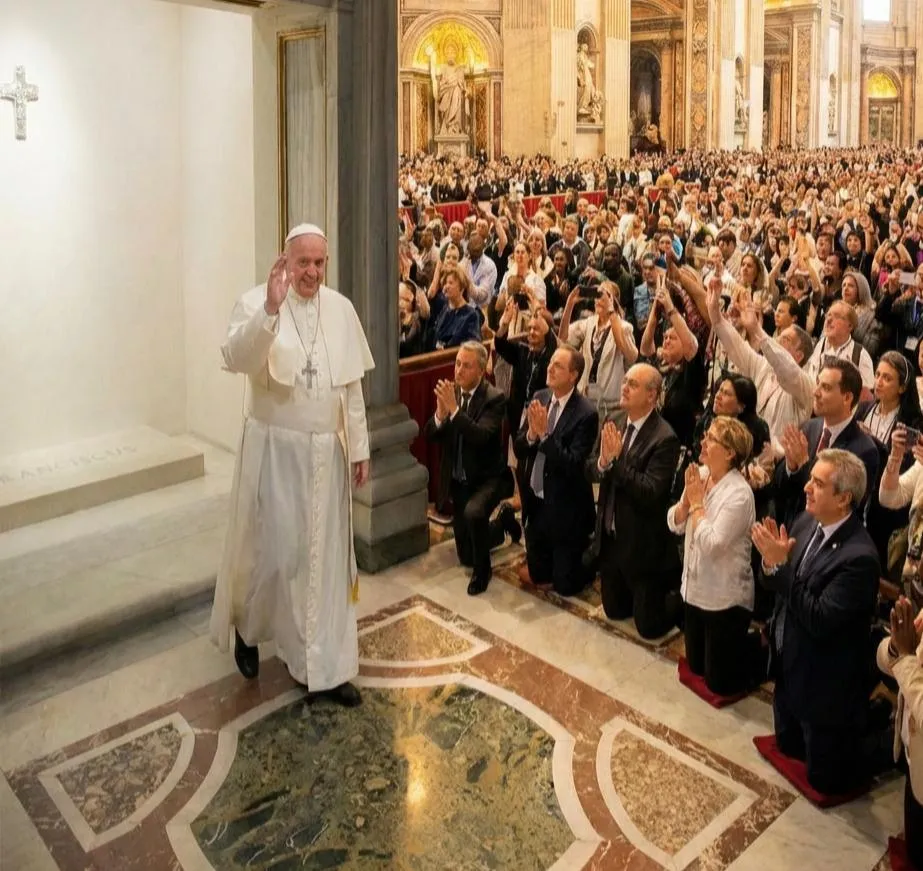
The Many False Christ To Come
Matthew 24:5 5 For many will come in My name, saying, ‘I am the Christ,’ and will deceive many.
Some prophetic interpretations connect Daniel 2:43 — describing iron mixed with clay that does not fully bond — with the idea of a divided or altered humanity, suggesting a symbolic picture of incompatible natures existing together. When paired with Jesus’ warning in Matthew 24:5 about deceptive figures claiming divine authority, these readings frame the last days as a time marked by confusion about identity, truth, and what it means to be human.
Within this perspective, certain researchers propose that modern UFO phenomena could represent a context in which narratives about non-human intelligence and hybrid beings emerge, echoing ancient traditions about the Nephilim. This view sees such developments as potential expressions of end-time deception, encouraging believers to weigh extraordinary claims carefully against Scripture while remaining watchful and grounded in their faith.
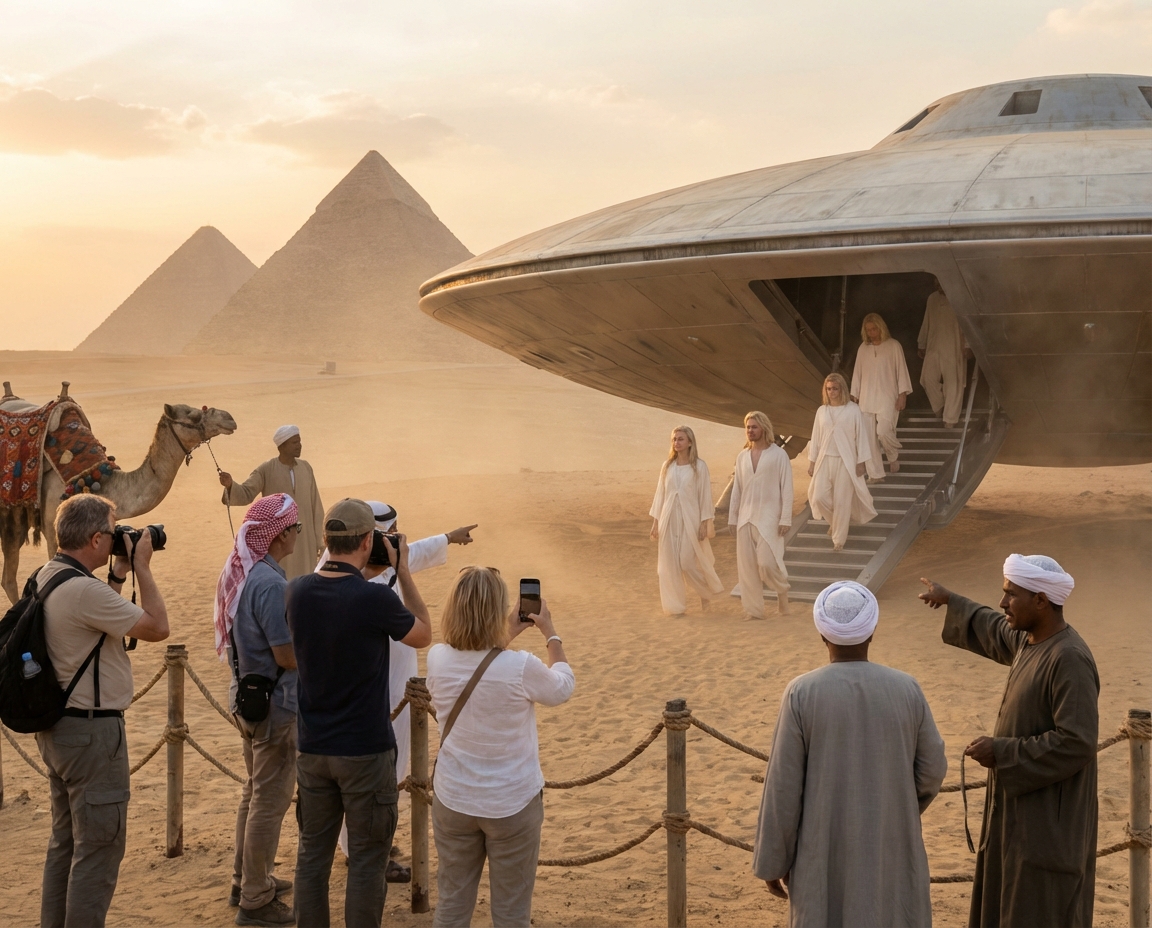
Ten Kings Receive Power & Authority WITH Pope Francis
Revelation 17:12 “The ten horns which you saw are ten kings who have received no kingdom as yet, but they receive authority for one hour as kings WITH the beast.
Revelation 17:12 describes ten kings symbolized by ten horns who receive authority for a brief period alongside the beast, suggesting a coordinated transfer or consolidation of power during a climactic stage of prophetic events. Many interpretations understand these rulers as a coalition of regional leaders—often associated with Europe because of the historical link between earlier empires in Daniel and Revelation and the geographic legacy of Rome—who act in unity with a central figure. Within some contemporary prophetic frameworks, the phrase that they rule “with the beast” is viewed as pointing to a partnership between political authority and a powerful religious presence. From that perspective, speculation about the reemergence or restored influence of a major church leader is sometimes seen as fitting the pattern of a religious figure helping legitimize or guide this alliance. These readings remain interpretive rather than definitive, encouraging readers to compare Scripture, history, and unfolding events with discernment rather than certainty.
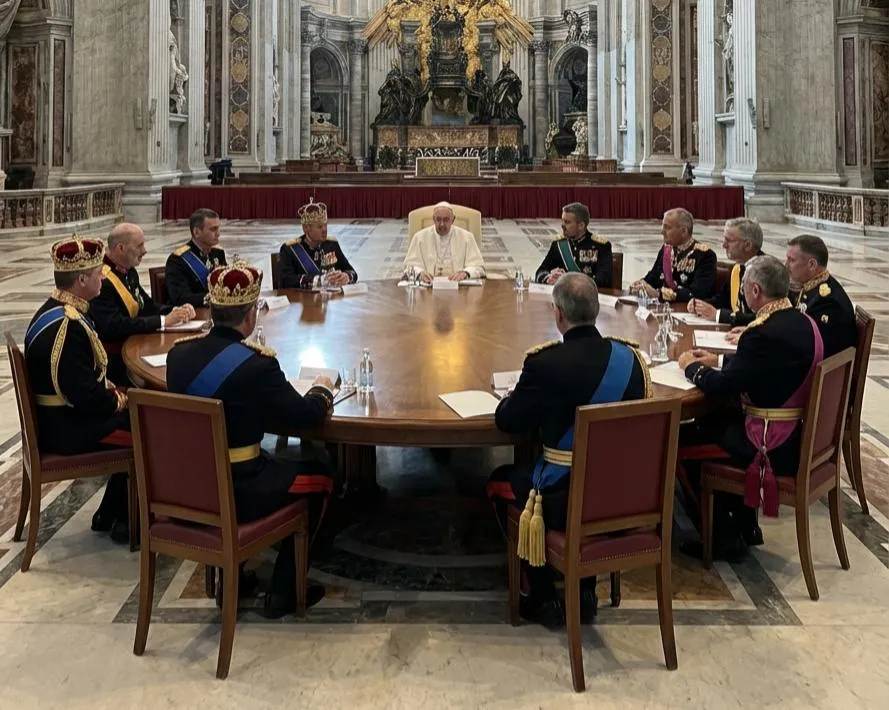
Ten Kings Give Their Power & Authority TO Pope Francis
Revelation 17:13 These are of one mind, and they will give their power and authority TO the beast.
Revelation 17:13 portrays a moment of unified agreement in which a group of rulers act “of one mind” and voluntarily hand their authority to the beast, symbolizing an unprecedented consolidation of political power around a single figure. Many interpreters understand this as a temporary alliance where national sovereignty is set aside in favor of centralized leadership during a time of global crisis or transformation. In some modern prophetic interpretations, this passage is viewed through the lens of a political-religious partnership in which a prominent religious leader could help legitimize that unity, creating influence that extends beyond spiritual authority into geopolitical power. From that perspective, the imagery of rulers giving their authority to the beast is seen as representing the rise of a dominant global figure backed by multiple nations’ resources, including military strength. These views are interpretive and speculative, encouraging readers to examine Scripture carefully while recognizing that the text describes symbolic prophecy rather than naming specific modern individuals.
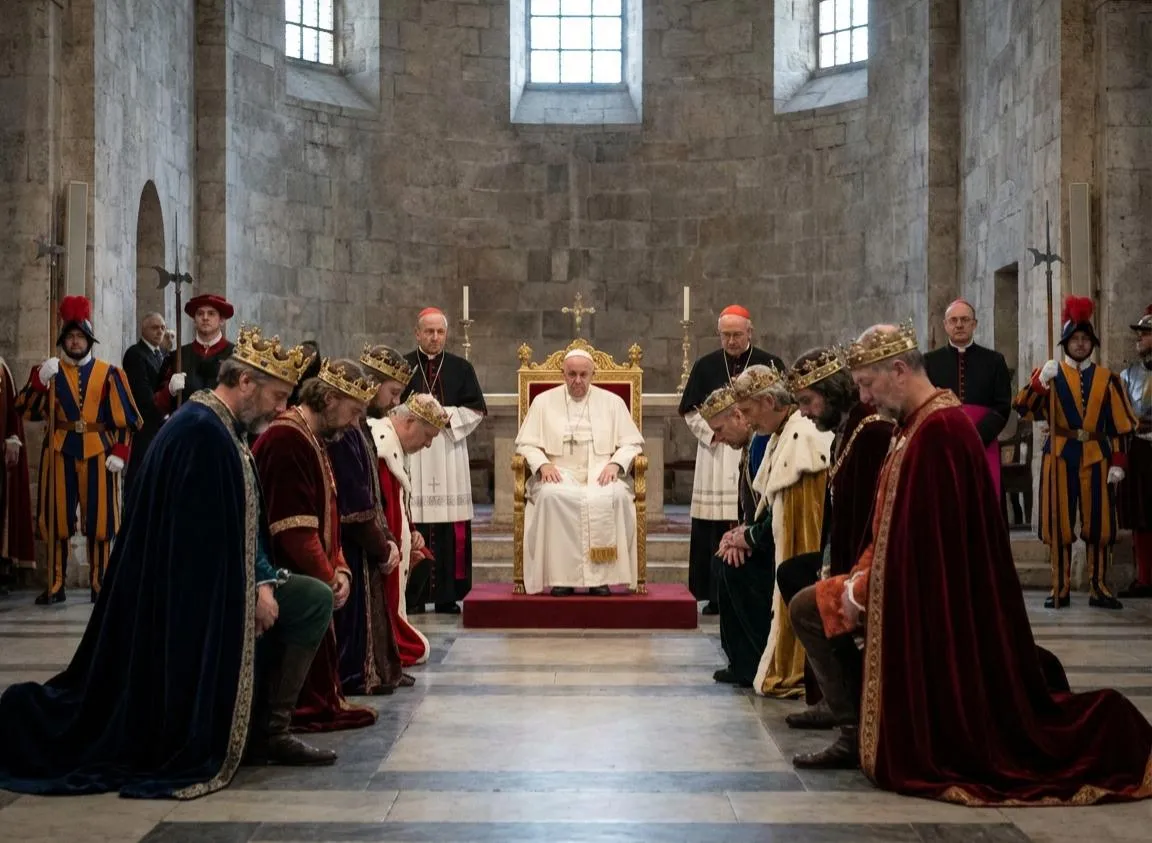
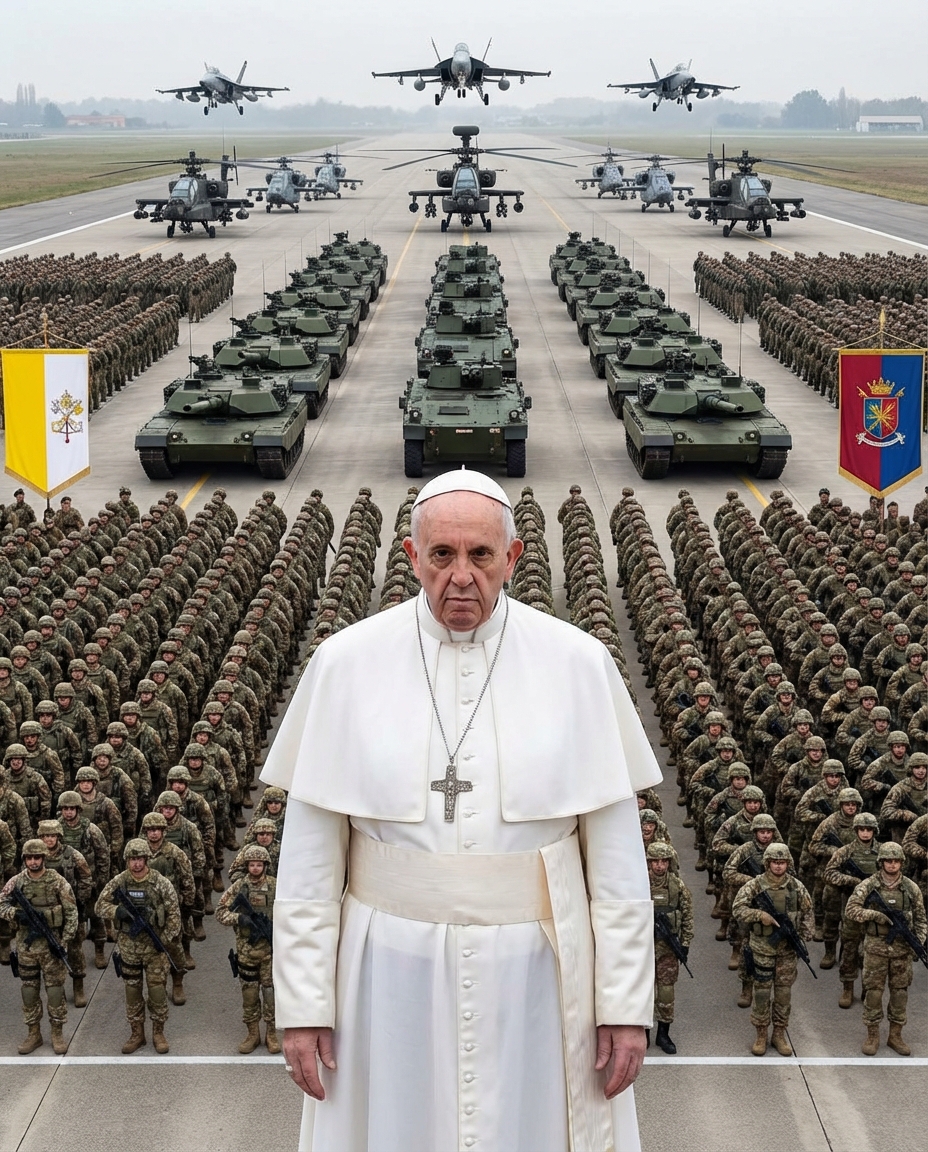
Pope Francis With The Military Power Of 10 Kings
Revelation 17:14 "These will make war with the Lamb, and the Lamb will overcome them, for He is Lord of lords and King of kings; and those who are with Him are called, chosen, and faithful.
Some prophetic interpretations understand Revelation’s imagery of rulers transferring authority to the beast as describing the emergence of an unmatched center of global influence. In this framework, the idea of a leading religious figure receiving the backing of multiple nations is seen as symbolizing a fusion of spiritual legitimacy and geopolitical power, creating a position of authority that appears impossible to challenge — echoing the question in Revelation, “Who is like the beast? Who is able to make war with him?”
From that perspective, this concentration of influence is viewed as setting the stage for the next phase of the prophetic narrative: the rise of the Antichrist. The unified support of powerful leaders is interpreted as preparing the world for a dominant figure whose rule is strengthened by both religious endorsement and international power, marking a pivotal transition in end-time expectations while remaining an interpretive reading rather than a confirmed identification of specific individuals.
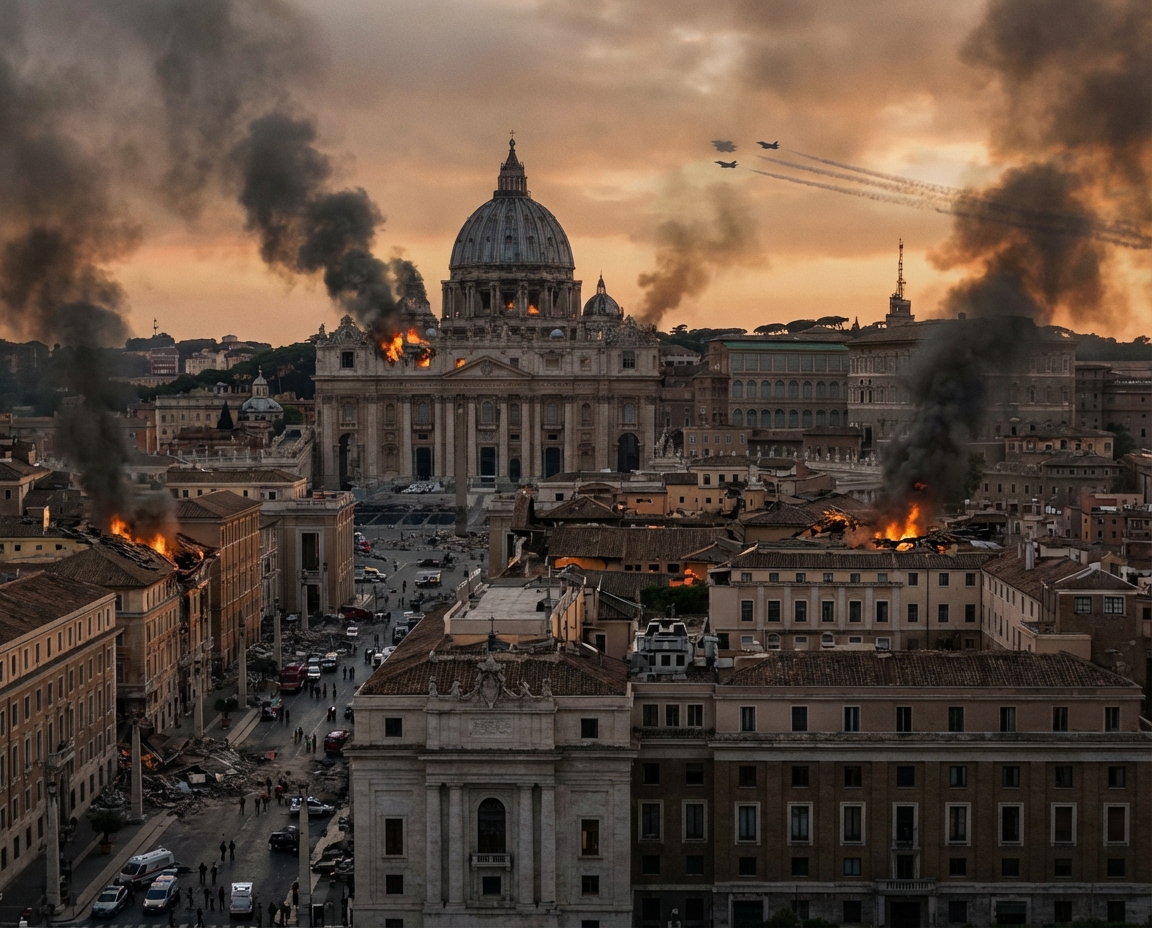
The Falling Away - The Destruction Of The Vatican
Revelation 17:16-17 16 And the ten horns which yousaw on the beast, these will hate the harlot, make her desolate and naked, eat her flesh and burn her with fire. 17 For God has put it into their hearts to fulfill His purpose, to be of one mind, and to give their kingdom to the beast, until the words of God are fulfilled. 18 And the woman whom you saw is THAT GREAT CITY which reigns over the kings of the earth.”
Revelation 17:15–16 explains that the “waters” represent peoples, multitudes, nations, and languages, portraying a global system of influence connected to the symbolic harlot. The passage then describes a dramatic reversal in which the same rulers symbolized by the ten horns turn against that system, stripping it of power and bringing sudden destruction, suggesting an internal collapse rather than an outside invasion.
Within some prophetic interpretations, this imagery is viewed as a picture of a major religious institution losing its authority through the very political alliance that once supported it. In that framework, the destruction of a central religious power is sometimes associated with the concept of “the falling away,” understood as a widespread spiritual shift preceding later events in Revelation. These readings remain interpretive, inviting readers to examine how symbolic prophecy could relate to institutional change, conflict, and the reordering of global religious influence.
Pope Francis Becomes The White Horse Of Revelation
Revelation 6:1-2 Now I saw when the Lamb opened one of the seals; and I heard one of the four living creatures saying with a voice like thunder, “Come and see.” 2 And I looked, and behold, a white horse.
Some prophetic interpretations connect the opening of the first seal in Revelation 6 — the rider on the white horse — with the emergence of a powerful leader associated with influence, unity, and conquest that initially appears peaceful or legitimate. In this reading, the consolidation of authority described in Revelation 17, where multiple rulers act together and transfer power to a central figure, is seen as creating the conditions for that rider’s rise and the beginning of the seven-seal sequence.
Within that framework, the white horse symbolizes the launch of a larger prophetic timeline in which political, spiritual, and global events accelerate. The idea is that a figure elevated through broad international support could serve as the catalyst that moves history into the period depicted by the seals, marking the transition from preparation to active fulfillment — an interpretive perspective that reflects symbolic connections rather than a definitive identification of specific individuals.
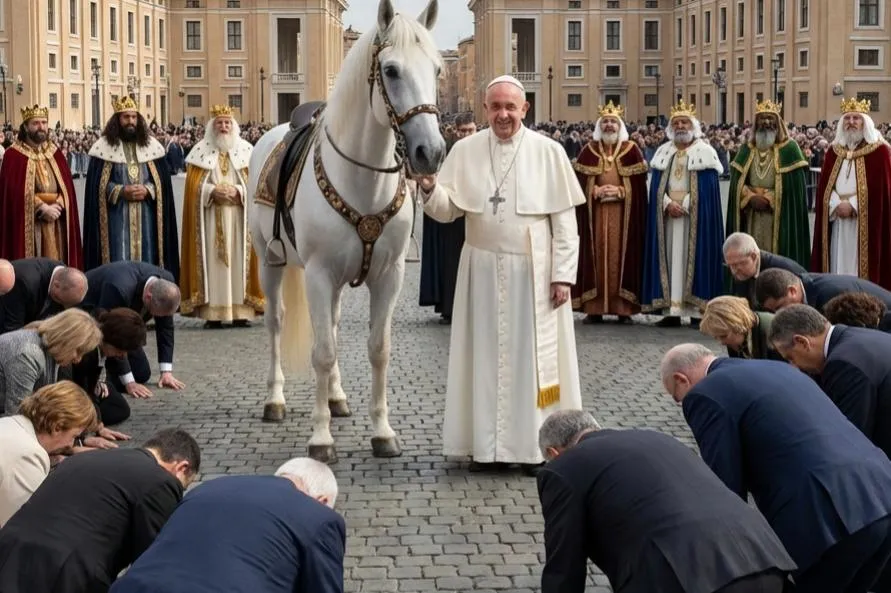
Pope Francis & Prince Hassan Bin Talal of Jordan-The Horse & Rider
Revelation 6:1-2 Now I saw when the Lamb opened one of theseals; and I heard one of the four living creatures saying with a voice like thunder, “Come and see.” 2 And I looked, and behold, a white horse. He who sat on it
Some prophetic interpretations connect Daniel’s vision of feet mixed with iron and clay to a final phase of divided strength — a partnership where political, cultural, or religious powers unite yet remain inherently unstable. Within this framework, alliances between influential global figures from different regions are sometimes viewed as symbolic expressions of that mixture, representing cooperation that advances a larger prophetic storyline while lacking true unity.
From that perspective, a partnership between prominent religious and geopolitical leaders is interpreted by some as preparing the environment for the rise of the Antichrist, who emerges amid blended systems of authority. The iron-and-clay imagery is therefore seen as illustrating both the power and fragility of such alliances, suggesting that the conditions leading to later Revelation events involve coordinated leadership that ultimately cannot hold together.
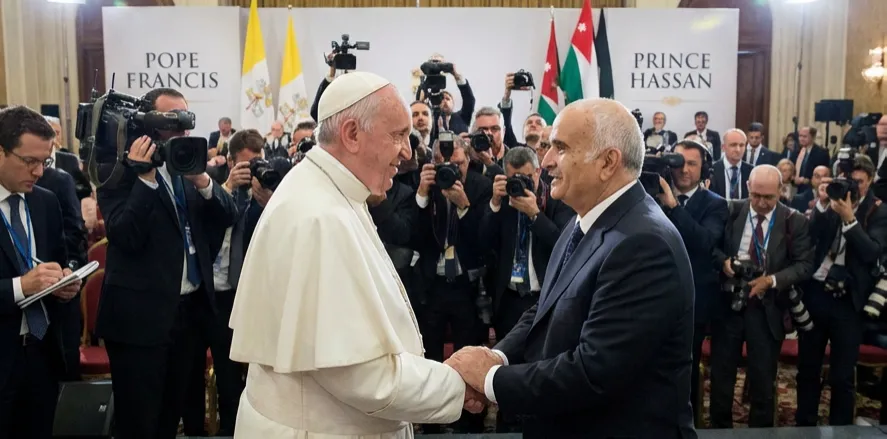
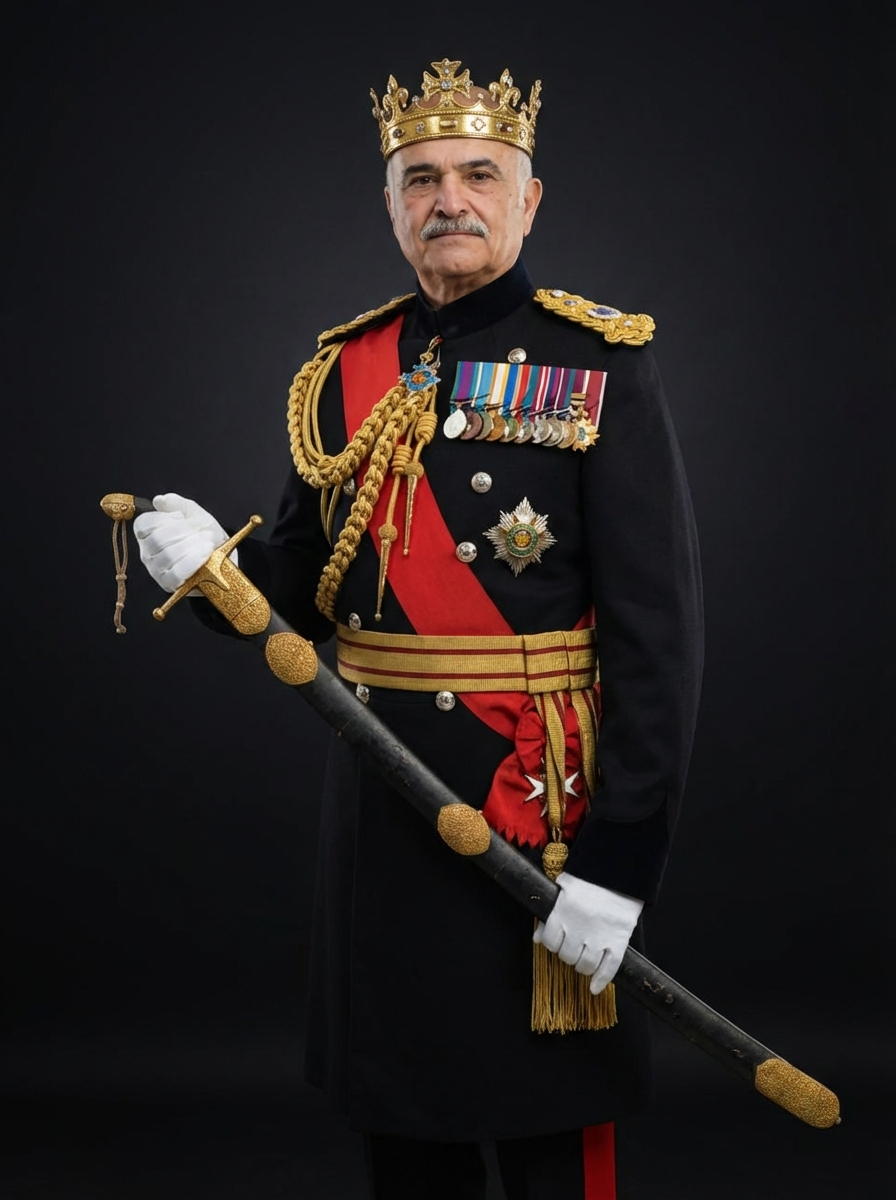
Prince Hassan Bin Talal Of Jordan Becomes King-The Beginning Of The 7 Year Tribulation
Revelation 6:1-2 Now I saw when the Lamb opened one of the seals; and I heard one of the four living creatures saying with a voice like thunder, “Come and see.” 2 And I looked, and behold, a white horse. He who sat on it had a bow; and a crown was given to him,
Some prophetic interpretations view the rider on the white horse in Revelation 6:2 — given a crown and going out to conquer — as symbolizing the rise of a newly empowered leader whose authority signals the beginning of a major prophetic sequence. The imagery of receiving a crown is often understood as a transfer or recognition of power that appears legitimate at first yet initiates wider global change represented by the opening of the seals.
Within this framework, modern discussions sometimes explore whether significant royal transitions or the elevation of influential figures could reflect that symbolic moment. From that perspective, the crowning of a regional leader is seen by some as a possible marker of the prophetic timeline moving forward, representing the emergence of leadership that sets larger end-time developments into motion. These connections remain interpretive and emphasize symbolic parallels rather than definitive identification of specific individuals.
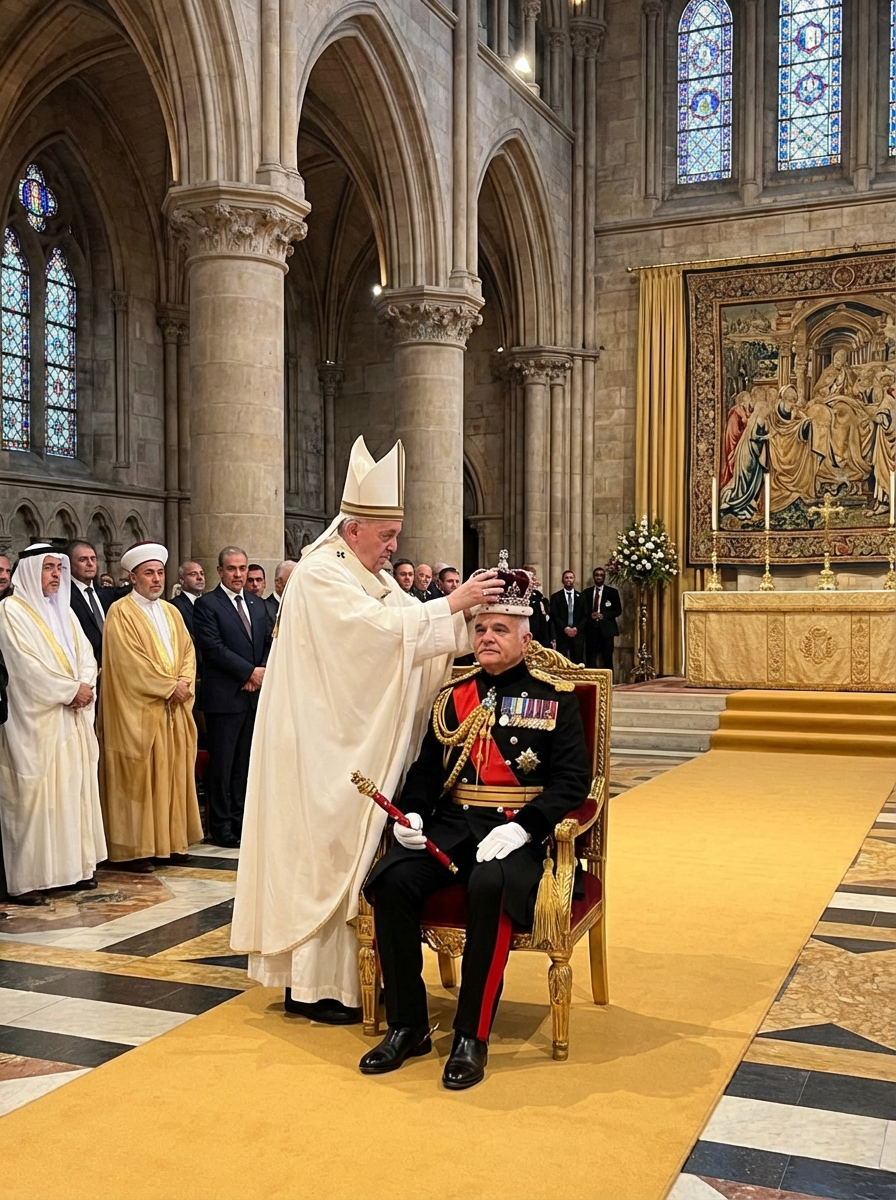
Pope Francis & Prince Hassan Rebuilds The 3rd Temple
Some prophetic perspectives focus on the intersection of religious authority, historical claims, and stewardship of sacred sites when discussing the possibility of a future temple in Jerusalem. The Hashemite custodianship over Islamic holy places in Jerusalem is often cited as giving Jordan a recognized role in matters surrounding the Temple Mount, while the historical removal of Jewish temple artifacts to Rome after 70 AD is sometimes referenced in discussions about heritage, symbolism, and religious influence tied to the Vatican.
Within this interpretive framework, the idea emerges that influential leaders connected to these spheres of authority could play symbolic or diplomatic roles in any future effort involving temple restoration or renewed religious activity in Jerusalem. Such views present the rebuilding of a temple as requiring cooperation across political and religious lines, highlighting how overlapping claims, historical memory, and international leadership are often woven into prophetic speculation rather than established outcomes.
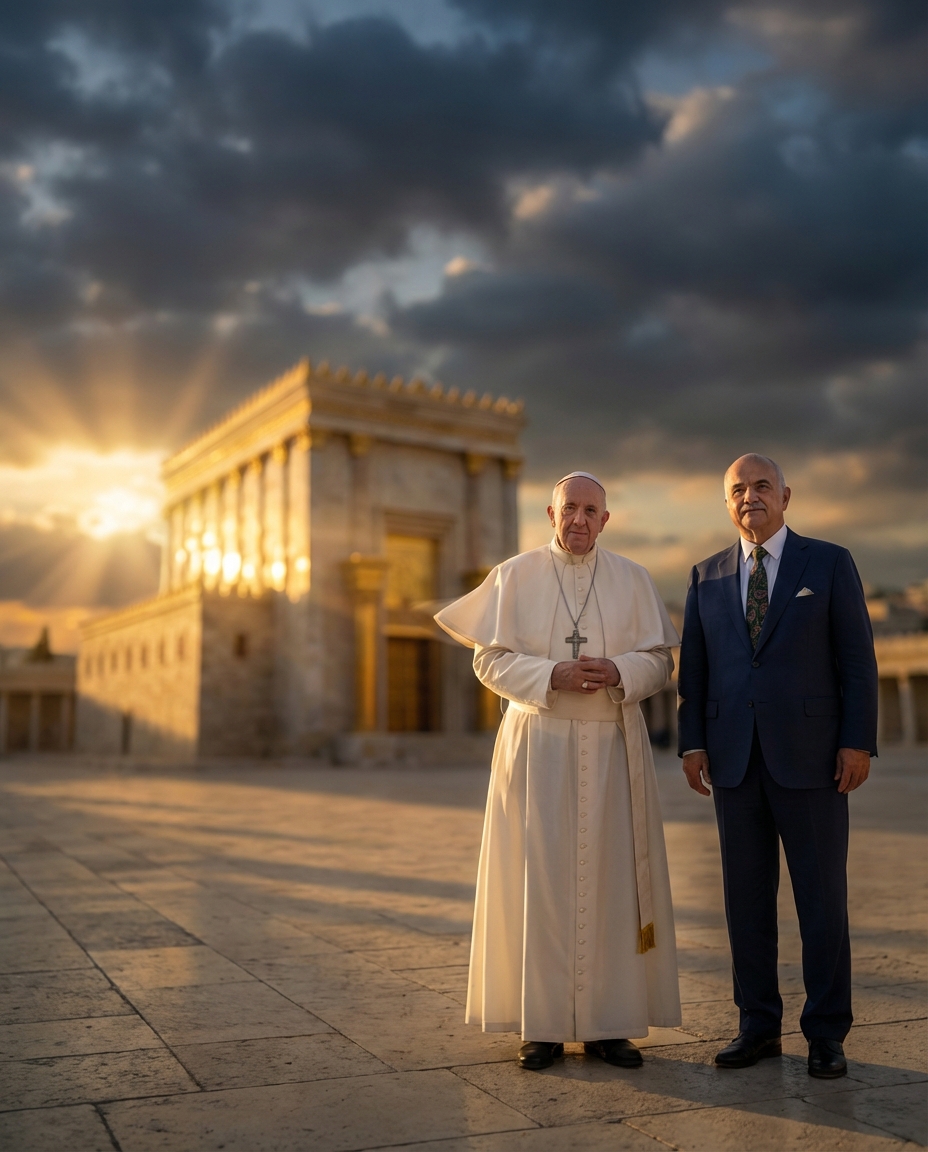
[King] Hassan Bin Talal Receives A Bow
Revelation 6:1-2 Now I saw when the Lamb opened one of the seals; and I heard one of the four living creatures saying with a voice like thunder, “Come and see.” 2 And I looked, and behold, a white horse. He who sat on it had a bow; and a crown was given to him,
Some prophetic interpretations explore the symbolism in Revelation’s imagery — particularly the rider on the white horse who carries a bow and receives a crown — as representing authority, legitimacy, and the beginning of a broader period of influence or conquest. In this line of thought, the bow is sometimes viewed not only as a weapon but as a symbol of inherited authority, covenant, or lineage connected to historical figures.
Within that framework, discussions occasionally draw parallels between prophetic symbolism and real-world religious artifacts tied to heritage and succession. The idea that an item associated with the Prophet Muhammad could be transferred to a descendant is interpreted by some as a symbolic moment of recognized authority that fits the imagery of the crowned rider. These connections remain speculative, reflecting attempts to relate symbolic prophecy to historical lineage and contemporary leadership rather than definitive prophetic fulfillment.
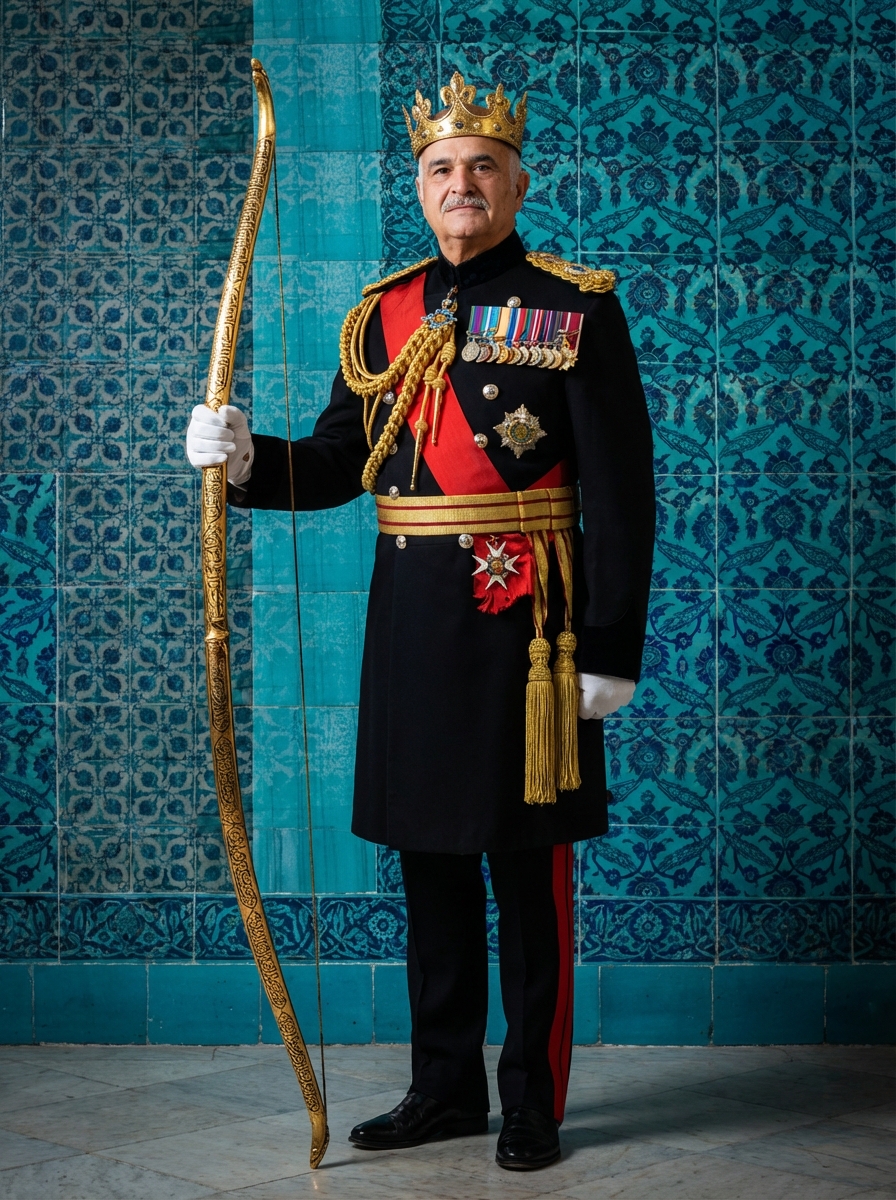
[King] Hassan Bin Talal Receives A Sword
Revelation 6:1-2 Now I saw when the Lamb opened one of the seals; and I heard one of the four living creatures saying with a voice like thunder, “Come and see.” 2 And I looked, and behold, a white horse. He who sat on it had a bow; and a crown was given to him,
Some prophetic interpretations view the second seal in Revelation 6:4 — the rider on the red horse given a great sword and the power to remove peace from the earth — as symbolizing the rise of conflict under an authority recognized by large populations. The sword is often understood as a sign of sanctioned power, warfare, and the ability to mobilize loyalty in ways that reshape geopolitical and religious landscapes.
Within this interpretive framework, symbolic connections are sometimes drawn between biblical imagery and historic artifacts associated with lineage and leadership in other religious traditions. The idea that a prominent descendant receiving a revered object could be seen as a public affirmation of authority is viewed by some as paralleling how religious leaders hold influence over their communities. These readings treat the imagery as metaphorical markers of legitimacy and mobilization, emphasizing that such parallels are speculative attempts to relate symbolic prophecy to contemporary figures rather than confirmed prophetic outcomes.
Subscribe For The Latest Videos
Stay up-to-date with all our latest episodes, exclusive updates, and deep dives into the world of bible prophecy. Subscribe now and get notified whenever new content drops—right at your fingertips!
Newsletter

The Revelation Watchman
Support
CUSTOMER CARE
LEGAL
FOLLOW US


Copyright 2026 NDUR Watchman LLC. All Rights Reserved.